
 By admin@handinhandadventures.com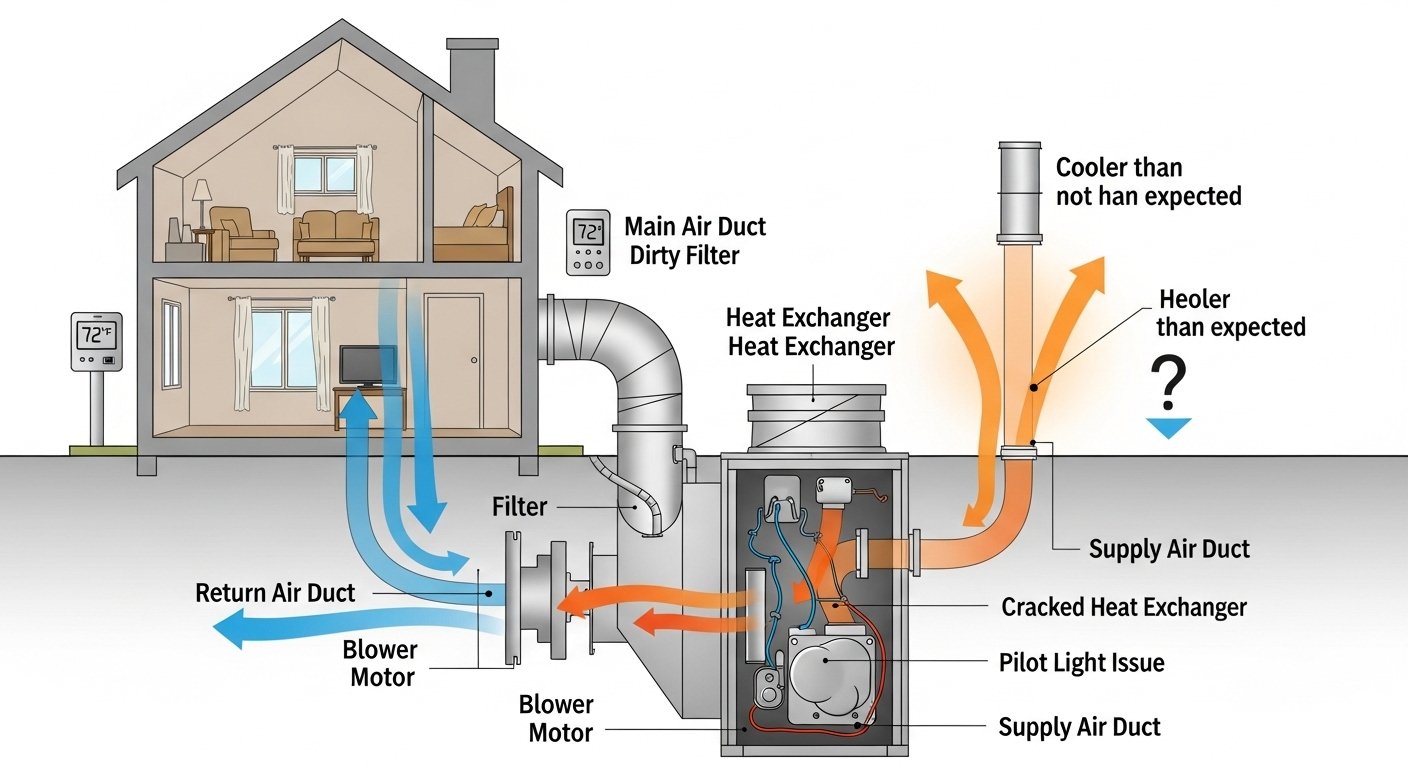
A furnace does not have to stop working completely to make a building uncomfortable. Sometimes the system runs, the vents push air, and the thermostat calls for heat, yet the air coming out feels cooler than expected. That kind of problem is frustrating because it creates doubt. Owners are left wondering whether the furnace is actually heating, whether the system is failing, or whether the issue is simply a matter of perception.
For property managers, facility teams, and building owners, cooler-than-expected airflow usually signals a performance issue worth investigating. The furnace may still be producing heat, but something in the process of generating, moving, or delivering that heat is falling short. The result is air that reaches occupied spaces without the warmth people expect from a properly functioning heating cycle.
Why The Air Feels Wrong
-
Cooler Air Usually Means Something
When occupants describe lukewarm airflow, the first assumption is often that the furnace is not heating at all. In reality, the system may still be operating, just not at the level it should. A contractor reviewing concerns through a provider such as Michael Bonsby HVAC, Plumbing, and Electrical would usually begin by separating true cold airflow from air that is merely less warm than expected. That difference matters because it helps determine whether the issue is a burner problem, an airflow problem, a duct-delivery issue, or simply the timing of the system’s cycling.
-
The Blower May Start Too Early
One common reason furnace air feels cooler than expected is blower timing. In a normal heating cycle, the burners ignite, and the heat exchanger begins warming before the blower pushes air into the duct system. If the blower starts too early, air may move through the vents before the furnace has built enough heat, creating the sensation of cool or barely warm airflow.
This issue can be tied to control settings, a faulty fan limit control, or problems in the sequence of operation. The furnace may eventually produce adequate heat, but the early part of the cycle leaves occupants feeling as though the system is underperforming. In buildings where comfort complaints are already frequent, that difference in timing is often enough to trigger concern.
-
Dirty Filters Can Lower Heat Delivery
Airflow restrictions can also make the air from the furnace feel cooler. A dirty filter limits the volume of air entering the system, which affects how efficiently heat is transferred and distributed. When airflow is reduced, the furnace may overheat internally, trip safety limits, or cycle in a way that weakens overall heating performance.
From the vent, the air may not feel cold, but it can feel weaker and less satisfying than normal. This is especially noticeable in larger properties or rooms farther from the equipment. The furnace is still trying to heat the building, but restricted airflow changes how that heat is carried to the occupied space.
-
Burner Problems Reduce Heat Output
If the burner assembly is not operating correctly, the furnace may not produce enough heat to create the expected temperature rise. Dirty burners, ignition issues, weak flame carryover, or inconsistent gas flow can all reduce the amount of heat entering the heat exchanger. In those cases, the blower may be working normally, but the air it moves simply isn’t being heated enough.
This type of problem often creates intermittent complaints. At times, the air may feel close to normal. At other times, especially during longer cycles or colder weather, the lack of proper burner performance becomes much more noticeable. The furnace does not need to shut down completely for occupants to feel the difference.
-
Duct Loss Can Cool Air Down
The furnace may be producing warm air correctly, but the duct system can reduce that warmth before it reaches the room. Ducts running through attics, crawl spaces, garages, or other unconditioned areas often lose heat along the way, especially if they are poorly insulated or leaking. By the time the air reaches the vent, it feels cooler than the temperature leaving the furnace.
This is one reason a furnace can appear to work properly near the equipment while occupants in distant rooms still complain about lukewarm airflow. The problem is not always in the furnace cabinet. Sometimes heat is lost during delivery, which changes how the entire system feels inside the occupied space.
The Complaint Usually Has A Cause
A furnace that blows air cooler than expected usually signals a specific performance problem, not merely a vague comfort issue. Early blower operation, dirty filters, weak burners, duct heat loss, thermostat cycling, oversized equipment, and return-air problems can all make heated air feel less warm than occupants expect. The system may still be running, but comfort drops because heat is not being generated, moved, or delivered as it should.
For property owners and managers, the important step is not to dismiss the complaint just because air is still coming out of the vents. Temperature quality matters as much as system operation. When the cause is identified clearly, the solution becomes much more precise, and the building regains the steady, reliable warmth the furnace was meant to provide.