
 By admin@handinhandadventures.com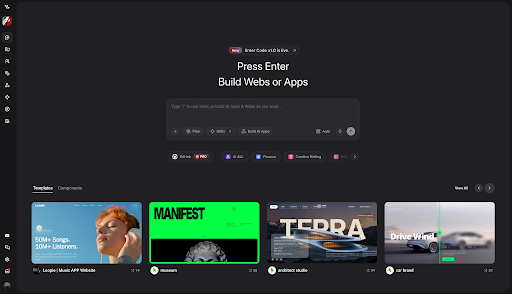
Pricing is one of the decisions that matters most in the early stages of a startup and one that receives the least rigorous thinking. Most founders arrive at an initial price through one of three approaches: copying the number on a competitor’s website, choosing a round number that feels about right, or starting low because the product is not fully built yet and charging full price feels hard to justify.
All three approaches share a common flaw: they start with the founder’s comfort rather than the customer’s perception of value. And the prices set in the early stages are disproportionately difficult to change later, which means the compounding cost of a pricing mistake is much larger than it appears when the number is first chosen.
Why Value-Based Pricing Is the Right Starting Point
The right foundation for pricing is the value your product delivers to the specific customer you are selling to, measured against the best alternative they have available. This is different from cost-based pricing, which starts with what the product costs to make. It is different from competitive pricing, which starts with what competitors charge. Both of those reference points are inputs to a decision, but neither of them is the right anchor.
The right anchor is the economic value of solving the problem for the customer. If your product saves a professional four hours per week, every week, the annualized value of that time is substantial at almost any reasonable hourly rate. If your product replaces a manual process that costs a business three times your annual subscription in staff time, the value equation is clear. Starting from that value and pricing to capture a reasonable share of it produces a number that is almost always higher than what founders would have chosen intuitively.
The Discount Trap
Discounting is one of the most common pricing mistakes in early-stage startups and one of the most corrosive. Every discount establishes a reference price in the customer’s mind that is lower than the stated price. Renewals become negotiations. Referrals happen at the discounted price. And the effective revenue per customer stays permanently below what the pricing page suggests.
There are legitimate reasons to offer introductory pricing for early customers who provide feedback and serve as references. The right structure for this is a time-limited introductory offer with explicit terms that the price will normalize after the introductory period, not an open-ended discount that becomes the permanent expectation.
The Packaging Problem
Many founders get the value question approximately right and then build packaging that does not reflect it. Pricing tiers that do not map to how customers think about their own needs. Feature combinations that do not align with what different customer segments actually want. And no natural upgrade path as customers grow and use the product more deeply.
Good packaging starts with a clear picture of the different types of customers you are serving and what distinguishes their needs. Building tiers around those distinctions, rather than around feature lists that make sense from the product perspective, produces a structure that customers can navigate intuitively and that creates natural expansion as their usage grows.
Testing Price Before You Lock In
One of the advantages of building quickly with Enter Pro is that you can test pricing mechanics before you have established them as permanent. Showing different prices to different user segments, testing whether an annual commitment changes conversion behavior, and watching how customers respond to different tier structures are all experiments you can run relatively early without requiring significant development investment.
Using an AI app builder to think through the user flows that connect your product to its pricing, how the upgrade prompt appears, what triggers the conversation about higher tiers, where the payment experience fits in the overall product journey, is part of building pricing that works in practice rather than just in theory.
When to Raise Prices
One of the most reliable signals that a product is underpriced is a conversion rate that is significantly higher than expected. If a very high percentage of visitors to your pricing page convert without much hesitation, you have probably made the price easy enough to justify that many customers would have paid more.
Most healthy SaaS products at the early stage convert somewhere between two and seven percent of visitors who reach the pricing page. Higher than that typically means the price is set below where it should be. The founders who recognize this early and raise prices while they still have the flexibility to do so build much healthier businesses than the ones who wait until the low price is embedded in the expectations of a large customer base.
Pricing as a Signal
Price communicates something beyond the cost of the product. In B2B software, low prices often signal low confidence in the value of what is being offered. A product that costs very little implies, to many professional buyers, that the problem it solves is not a very serious one. This is not always true, but the perception is common enough that pricing too low can actively undermine the trust you are trying to build with enterprise customers.
Price with the confidence that comes from understanding the value you deliver. That confidence is not arrogance. It is evidence that you understand your customer’s situation well enough to have an honest conversation about what the solution is worth to them.
One final pricing consideration that affects many early-stage companies is the relationship between price and the perceived seriousness of the buyer. Very low prices tend to attract customers who are price-sensitive and quick to churn when a cheaper alternative appears. Higher prices, set appropriately relative to value, tend to attract customers who have evaluated the product seriously, who are committed to making it work, and who stay longer. The economics of the customer base that a pricing decision attracts are part of what makes pricing such a strategic decision rather than just a revenue optimization.