
 By admin@handinhandadventures.com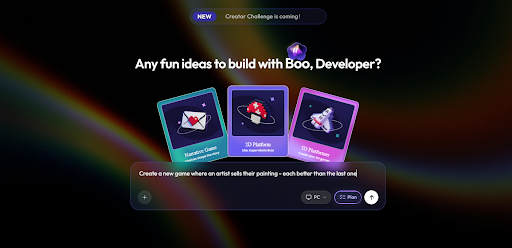
The most important step in the entire vibe coding game process comes before you open any tool. It is the act of identifying, with as much precision and honesty as you can, the single feeling you want players to have while playing your game. Not the theme, not the genre, not the mechanical structure — the feeling.
This sounds easier than it is. Most creators, when they try to describe the feeling they want to create, reach for genre labels or mechanic descriptions because those are the categories the medium has given them. “I want it to feel like a puzzle game” is a mechanical description disguised as a feeling. “I want it to feel like solving something that has been sitting in your mind for days and finally clicking into place” is a feeling. The second description is harder to write but produces a more coherent game.
Translating That Feeling Into a Starting Prompt
Once the feeling is identified clearly, the translation into a starting prompt is the creative act that sets the entire build in motion. A strong starting prompt for a vibe coding game is specific enough to give the AI genuine direction but open enough to allow it to make interesting interpretive choices.
Reference specific sensory experiences — a temperature, a time of day, a quality of light, a texture. Reference cultural or emotional contexts that carry the feeling you are describing — a specific kind of music, a type of landscape, a state of mind. Layer these references rather than flattening them into a single descriptor. “Something warm and slightly overcrowded, like a family home at the holidays, but with an undercurrent of something being not quite right” is more generative than “a festive but slightly unsettling game.”
Using Combos to Take Your Vibe Game From Prompt to Published
Here is the complete step-by-step process for going from a feeling to a published, shareable vibe coding game on Combos with its native Ai game agent.
Step 1 — Type It Raw: Take your starting feeling and type it directly into Boo at combos.fun — raw and unedited. Do not correct it toward game convention or second-guess whether it sounds like a real game idea. The stranger the prompt, the more interesting the output is often likely to be.
Step 2 — React, Don’t Direct: Let Boo generate the Game Design Document without steering it. Your role at this stage is to react to what it produces — to feel whether the output has the quality you were aiming for — rather than to direct it toward a predetermined result.
Step 3 — Revise What Breaks the Vibe: Accept the aesthetic choices that feel right and ask Boo to revise anything that breaks the vibe in natural language. Be specific about what is wrong with what needs changing — “the colour palette is too saturated, it feels energetic when it should feel tired” is more useful than “change the colours.”
Step 4 — Ask the One Question: Run the playable build and ask yourself one question only: does this feel like what I imagined when I wrote the prompt? If the answer is yes, publish it. If not, identify the single biggest gap and address that before anything else.
Reviewing the First Output and Knowing What to Change
The first output from a vibe coding game build is rarely perfect. It is a first interpretation — the AI’s best guess at what your description means in playable form. The creator’s job at this stage is to evaluate the output as an aesthetic object rather than a mechanical one.
Does the visual palette match the feeling? Does the movement speed feel right for the emotional register? Does the ambient audio support or contradict the atmosphere? These are the questions that matter at the first review stage. The mechanics can be evaluated later — and in many vibe coding games, they will be intentionally simple. The aesthetic coherence is what needs to be present in the first output and refined through subsequent iterations.
Sharpening the Aesthetic Until It Matches Your Vision
Aesthetic refinement in a vibe coding game is an iterative process that works best through small, specific adjustments rather than large-scale rebuilds. Each follow-up prompt should address one thing — one aspect of the visual style, the pacing, the audio texture, or the environmental feel that is not quite matching the intended feeling.
The risk at this stage is losing the original energy through over-refinement. Every change you make based on your own taste moves the output further from the initial AI interpretation and closer to your preferences — which is sometimes the right direction and sometimes the wrong one. Check in periodically with the original prompt. Ask whether the current version still has the quality that made the prompt feel worth pursuing.
The Launch Decision — Done Enough Is Real
The hardest decision in a vibe coding game project is when to publish. There is always something that could be adjusted, refined, or reconsidered. The colour could be slightly different. The movement could be slightly smoother. The opening could be slightly better at establishing the feeling.
The practical answer is this: publish when the game produces the feeling you intended in someone who encounters it without context. If a first-time player experiences something close to what you set out to create, the game is done. Every hour spent refining beyond that point is diminishing returns against the risk of losing the spontaneity that vibe coding games depend on. Done enough is real. Perfect is never shipped.
Conclusion
Launching a vibe coding game from a single feeling is a process that rewards creative honesty, specific observation, and the willingness to publish before perfectionism takes over. Combos supports this process at every stage — from emotional prompt to aesthetic GDD to playable prototype to shareable link. The feeling you start with is the creative compass. Keep returning to it throughout the build, and publish when the game has found it.