
 By admin@handinhandadventures.com
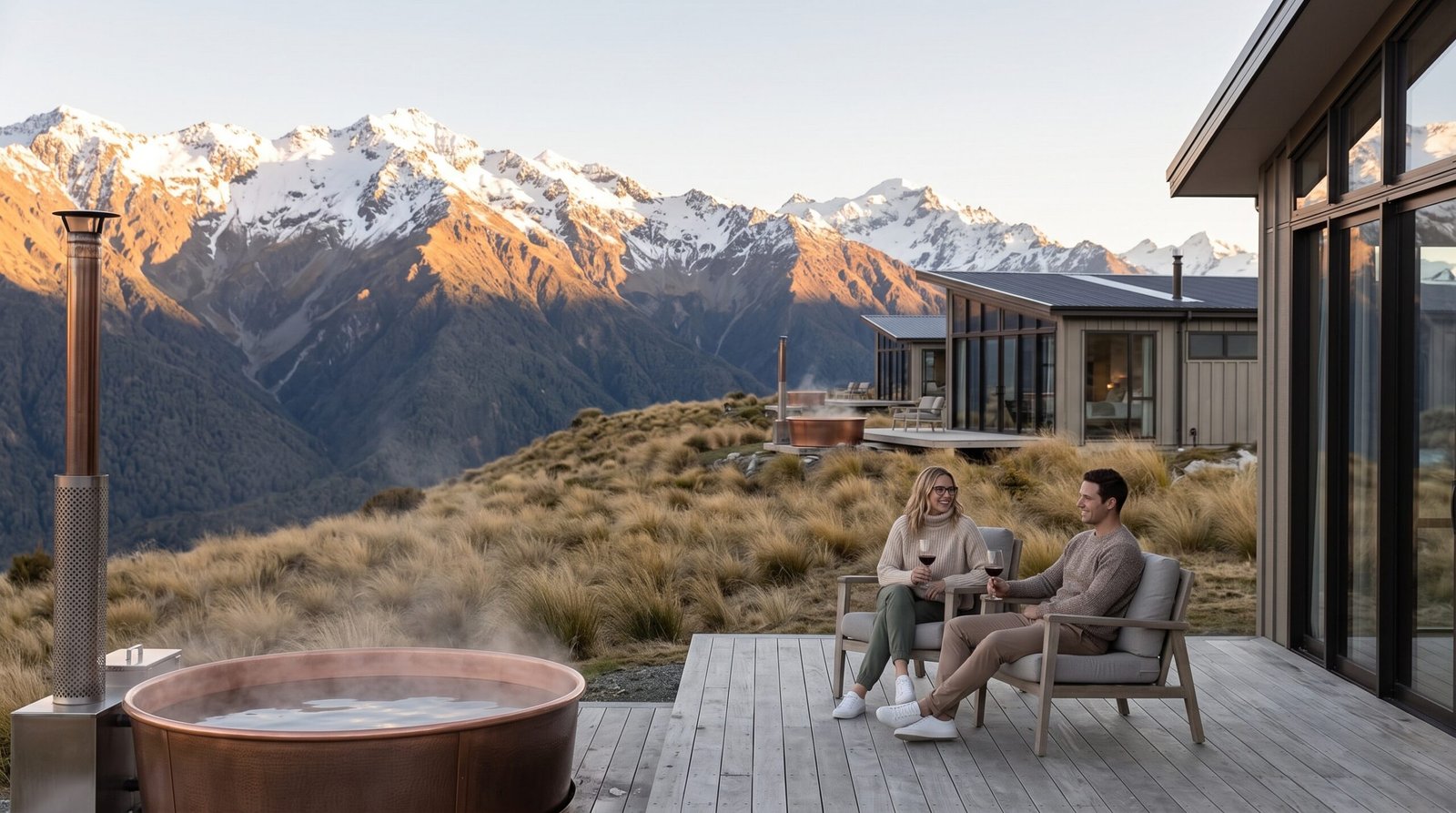
New Zealand’s South Island is one of the best road trip destinations in the world. In a single drive you can see snow-covered mountains, blue lakes, green farmland, wild beaches and small friendly towns — and the distances are short enough that you never spend a whole day just driving. The roads are quiet, the views change every hour, and almost every stop feels like a postcard.
This complete guide covers the classic South Island loop: where to start, how many days you need, the best route day by day, where to stay, what it costs, and the practical tips that make the trip easy. It is written for first-time visitors, couples and families travelling by rental car or campervan.
The Classic Route at a Glance
Most travellers start in Christchurch and finish in Queenstown, or do a full loop back to Christchurch. The classic route is about 1,500 kilometres (930 miles) and takes 10 to 14 days if you drive slowly and stop often. If you only have a week, you can still see the highlights — Christchurch, Lake Tekapo, Mount Cook, Wanaka and Queenstown — by skipping the far north and the West Coast glaciers.
A good 10-day route looks like this: Christchurch (1 night), Lake Tekapo (1 night), Mount Cook / Aoraki (2 nights), Wanaka (2 nights), Queenstown (2 nights), and Te Anau and Milford Sound (2 nights). From Queenstown you can fly home, or drive back to Christchurch via the West Coast in 3 to 4 more days.
If you want a slower, more relaxing version of a New Zealand trip, read our guide to Tour New Zealand with Relaxing Journeys — it covers the same country at a gentler pace, with more time in each place.
Day 1-2 — Christchurch: Start Slow
Christchurch is the easiest place to start. Pick up your rental car at the airport, stock up on food and supplies, and spend your first day walking around the city centre, the Botanic Gardens and the Avon River. The city is flat, friendly and easy to drive in, which makes it a good first stop after a long flight.
Stay one night in Christchurch, or two if you arrive tired. Book a hotel or motel near the centre so you can walk to restaurants in the evening. Before you leave, check the weather forecast for Mount Cook — mountain weather changes fast, and a clear day there is worth planning around.
Day 3 — Lake Tekapo: The Bluest Lake You Will Ever See
Drive from Christchurch to Lake Tekapo in about 3 hours (230 kilometres). The road crosses the Canterbury Plains and then climbs into the Mackenzie Country, where the hills turn golden and the lakes turn an unreal turquoise blue.
Lake Tekapo is famous for its colour, which comes from fine rock dust in the glacial water. Visit the small Church of the Good Shepherd on the lake shore, walk along the water, and if the sky is clear, stay up late — this area is part of the Aoraki Mackenzie Dark Sky Reserve, one of the best places in the world to see stars. In spring, the lupins bloom along the lake in purple and pink, and the whole shore looks like a garden.
Stay one night in Tekapo. Book early in summer, because the town is small and rooms sell out.
Day 4-5 — Mount Cook / Aoraki: New Zealand’s Highest Mountain
From Tekapo, drive about 2.5 hours to Mount Cook Village, past Lake Pukaki — stop at the viewpoint, it is one of the best photos on the whole trip. Mount Cook, called Aoraki in Maori, is 3,724 metres high, the tallest mountain in New Zealand.
The best walk here is the Hooker Valley Track: 3 hours return, mostly flat, crossing three swing bridges and ending at a glacial lake with Mount Cook right in front of you. It is suitable for most fitness levels, including children who can walk for a few hours. Take water, sunscreen and a warm layer, even in summer — the wind off the glacier is cold.
Stay two nights so you have a spare day if the weather is bad. If the mountain is hidden in cloud on your first day, the second day often clears. For more coastal scenery after the mountains, our guide Sailing Into History: Coastal Destinations is a good companion read for planning the seaside part of a New Zealand trip.
Day 6-7 — Wanaka: Lakes, Walks and a Slower Pace
Drive from Mount Cook to Wanaka in about 3 hours, through the Lindis Pass — a wide, golden valley that looks completely different from the mountains behind you. Wanaka is a small lakeside town with a relaxed feel, and it is a good place to rest after Mount Cook.
Walk along the lake to the famous Wanaka Tree, a lone willow standing in the water that has become one of the most photographed trees in the world. If you like hiking, the Roy’s Peak track is a steep but rewarding climb with views over the lake and the mountains. If you prefer something easier, hire a bike and ride the lakeside trail, or take a short boat trip on the lake.
Stay two nights in Wanaka. It has good cafes, a farmers’ market in summer, and plenty of family-friendly places to stay.
Day 8-9 — Queenstown: Adventure Capital
From Wanaka to Queenstown is only about an hour’s drive, over the Crown Range — the highest main road in New Zealand, with wide views on both sides. Queenstown sits on Lake Wakatipu, surrounded by mountains, and it is known as the adventure capital of the country.
You do not have to do extreme sports to enjoy Queenstown. Take the Skyline Gondola up Bob’s Peak for the view, walk the lakeside trail, visit the small town of Arrowtown nearby, and try the famous Fergburger — expect a queue, it is worth it. If you do want adventure, Queenstown offers bungy jumping, jet boating, skiing in winter and skydiving, all from the town centre.
Stay two nights here. Queenstown is the most expensive town on this route, so book your room early and eat at least one meal from a supermarket or bakery to keep costs down.
Day 10 — Te Anau and Milford Sound: The Best Day Trip
From Queenstown, drive 2 hours to Te Anau, the gateway to Milford Sound. The next morning, drive the Milford Road — one of the most beautiful drives in the world — through the Homer Tunnel to Milford Sound itself. The road takes about 2 hours each way, and you should allow a full day.
At Milford Sound, take a boat cruise (about 2 hours) through the fiord, past waterfalls and steep cliffs that rise straight out of the sea. If it rains, do not cancel — Milford Sound is even more beautiful in the rain, with hundreds of temporary waterfalls appearing on the cliffs. Book your cruise in advance in summer, and start early to avoid the tour buses.
You can stay a night in Te Anau, or drive back to Queenstown the same evening. If you have more time, Fiordland National Park has longer walks, including the famous Milford Track.
Where to Stay and What It Costs
Accommodation on the South Island ranges from $40 to $60 per night for a hostel dorm bed, $100 to $150 for a motel room, and $150 to $250 for a mid-range hotel. Holiday parks with cabins are a good family option, and they often have kitchens, which save money on food. In summer (December to February), book 2 to 3 months in advance — the best places sell out.
For a couple, a realistic daily budget is: accommodation $120 to $180, food $60 to $90, fuel $30 to $50, activities $30 to $60. That is about $240 to $380 per day, or $2,400 to $3,800 for 10 days, not including international flights or the rental car. A campervan can save on hotels, but rental and campsite fees are similar once you add them up.
Driving Tips for the South Island
Drive on the left in New Zealand. The roads are good but narrow and winding in the mountains, so allow more time than the map suggests — 200 kilometres often takes 3 hours, not 2. Fill up with fuel when you see a petrol station in small towns, because the next one can be a long way away.
Book your rental car early, and check whether your travel insurance covers it. Most rental companies charge extra for a second driver, and a smaller car is easier on mountain roads and cheaper on fuel. If you drive in winter (June to August), you may need snow chains in the mountains — ask the rental company before you leave Christchurch.
Best Time to Go
Summer, December to February, is the most popular time: long days, warm weather and all the walks open. It is also the busiest and most expensive. Autumn, March to April, is quieter, with golden colours and mild weather, and it is a good time for a road trip. Spring, September to November, brings flowers and snow on the mountains, but some high walks can still be closed. Winter is best for skiing in Queenstown and Wanaka, but driving needs more care.
Frequently Asked Questions
How many days do I need for the South Island?
Ten days is enough for the classic route from Christchurch to Queenstown and Milford Sound. Fourteen days lets you add the West Coast glaciers and the north of the island without rushing.
Do I need a campervan or a car?
A car with motels is easier for first-time visitors, especially in summer when campsites are busy. A campervan gives you more freedom, but you must stay in designated campsites, and driving a large vehicle on mountain roads is slower.
Is the South Island good for families?
Yes. The drives are short, the towns are safe, and children love the lakes, the walks and the animals — you will see sheep everywhere, and kea parrots in the mountains if you are lucky.
What should I pack?
Layers, a waterproof jacket, good walking shoes, sunscreen and a warm hat. The weather can change from sunshine to rain in an hour, even in summer, especially around Mount Cook and Milford Sound.
Conclusion
A South Island road trip is not about ticking off sights — it is about the drive itself. The best moments are often the unplanned ones: a lake you did not expect, a small town cafe, a clear night full of stars at Lake Tekapo. Drive slowly, stay two nights in the places you love, and leave one day free in your plan. New Zealand rewards travellers who take their time, and the South Island is the best place in the country to do exactly that.