
 By admin@handinhandadventures.com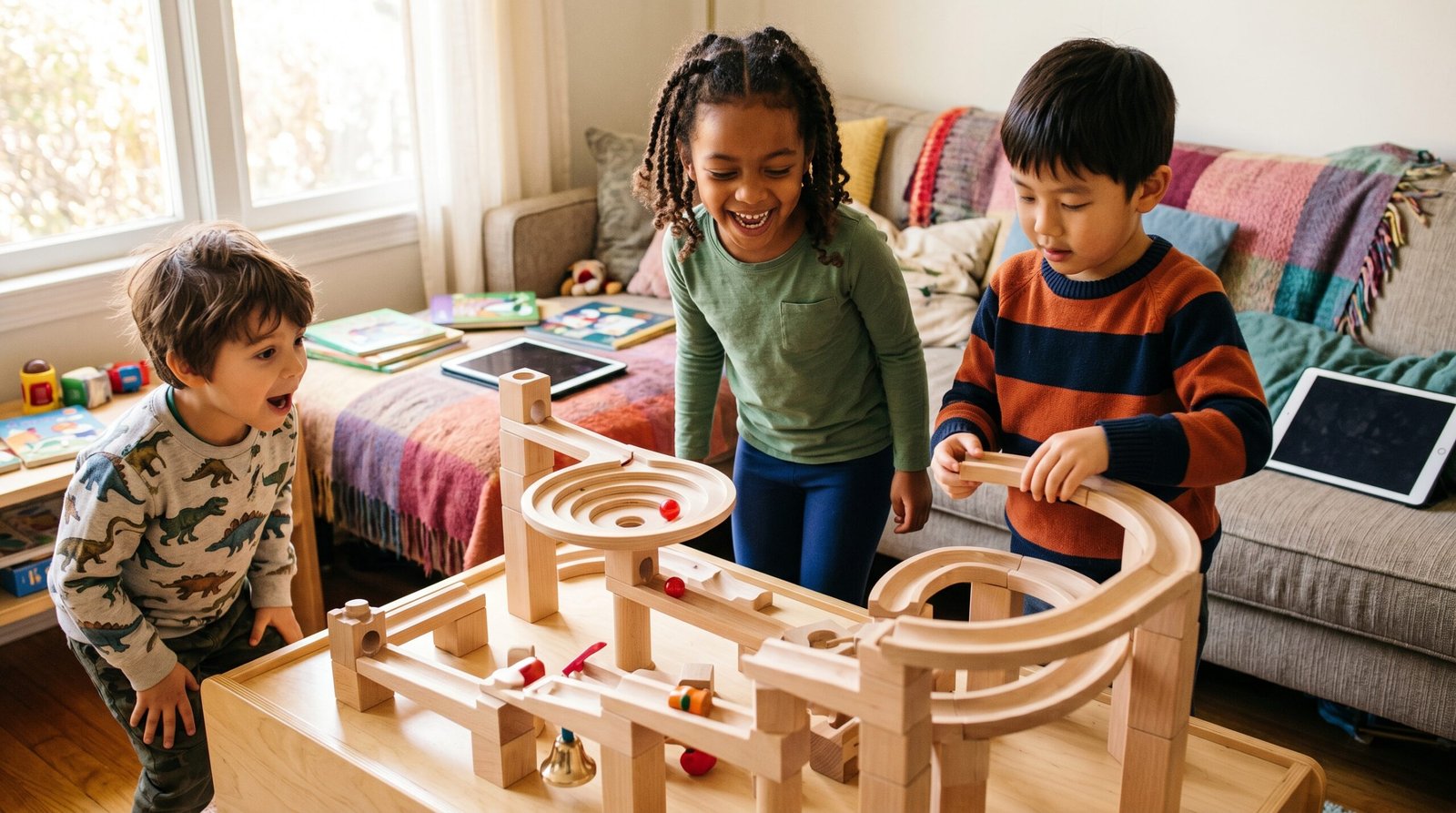
Every parent has watched the scenario play out.
A new toy arrives. There was real thought behind the choice — it looked engaging, it was reviewed well, the age recommendation matched. The wrapping comes off, there’s genuine excitement for maybe ten or fifteen minutes, and then the child is back in front of a screen. The toy sits. The screen wins again.
The frustration isn’t irrational. It’s a real asymmetry. Screens are extraordinarily well-engineered to hold attention through mechanisms that have nothing to do with the content being valuable. Toys that compete effectively with screens aren’t the ones with more features or brighter colors — they’re the ones that generate a fundamentally different kind of engagement.
Why Passive Entertainment Wins by Default
Understanding what screens offer helps explain why so many toys can’t compete with them.
The content stream is continuous. The novelty is constant. The feedback loop — action, response, reward — is immediate and optimized. And critically, the activation energy required to start is essentially zero. The device is right there, always ready, always offering something the algorithm has identified as likely to hold this particular child’s attention for a few more minutes.
A toy that requires setup, imagination, or even just picking up off a shelf requires more than that baseline. Most toys lose that comparison — not because children are passive by nature but because the comparison is genuinely asymmetric. The child is choosing the path of least resistance, which is rational.
The toys that break through are the ones that generate their own engagement loop — where doing something produces a result, the result opens a new possibility, and the child is drawn forward by genuine curiosity rather than algorithmic delivery.
Building Toys and the Physical Feedback Loop
Construction toys work because they do something screens can simulate but cannot replicate: they produce real objects in the physical world that the child actually caused.
When a child builds something with creative building toys from Jelly Blox — soft, colorful, squeezable block systems designed for younger children — the object they’re building is physically real. It holds shape. It can be knocked over and rebuilt differently. It responds to what the child does rather than executing a predetermined sequence. The child who builds a tower and watches it fall has genuinely caused something to happen in the real world, and that physical causation registers differently than watching causation on a screen.
Jelly Blox specifically removes the frustration point that loses many construction toys their audience: the requirement for precise assembly. The soft, forgiving material means younger children can build successfully without the fine motor skills that more rigid construction systems require, which keeps the engagement loop running rather than breaking it at the assembly step.
The Emotional Dimension of Play
Not all sustained engagement is cognitive. Some of the most meaningful and persistent play children do involves emotional connection — nurturing something, caring for something, building a relationship with something that responds.
Interactive plush toys have served this function across generations. The best modern versions of the category have substantially more sophisticated interaction than their predecessors, and the quality of engagement reflects that. Interactive plush toys have served this function across generations, and FurReal Friends animals do exactly what this type of play requires — they respond to touch and sound in ways that invite genuine emotional engagement, creating a dynamic that static plush simply cannot provide.
For children who aren’t yet ready for the responsibility of a real pet, this kind of interactive companionship builds the care instincts and emotional attentiveness that responsible pet ownership eventually requires. The child who feeds and holds and responds to an interactive animal is developing real capacities, not just playing.
What Research Consistently Shows
The developmental research on play has been consistent long enough to treat as settled.
Open-ended, hands-on play builds executive function — the ability to plan, maintain attention on a goal, and manage competing impulses — precisely because it requires these capabilities rather than providing them pre-built. It builds language through narration and negotiation. It builds spatial reasoning through construction. It builds empathy through roleplay and nurturing. These are outcomes that passive screen consumption doesn’t produce at comparable levels.
None of this requires expensive equipment or elaborate play environments. It requires toys that invite the child’s active participation rather than performing for their passive observation — and that keep inviting participation across many sessions rather than being used once and set aside.
What Makes a Toy Actually Work
The toys that successfully compete with screens long-term share a few characteristics worth identifying.
They offer variable outcomes — the child’s actions produce different results each time rather than the same predetermined animation. They scale with the child’s developing abilities rather than being quickly mastered and then boring. They invite parent participation at whatever level the parent can offer, because play that involves another person compounds in value significantly.
And they have low activation energy — they’re accessible and inviting rather than requiring significant setup or explanation before engagement becomes possible.
Giving Kids Something Worth Doing
The screen will always be there, and it will always require less from the child than a toy does. That asymmetry doesn’t resolve — but it doesn’t have to be the determining factor.
Choose toys that require something genuinely from the child. Make them easy to start without lengthy setup. Be present enough to play alongside occasionally, because joint attention multiplies the value of the activity.
The children who grow up with regular hands-on play — who build, create, nurture, and construct — develop capabilities that the children who don’t simply don’t have to the same degree. That’s not a small return on the investment of choosing deliberately.
The Long View on Screen Time
The goal isn’t eliminating screens — it’s ensuring they don’t win by default every single time.
A child who has regular experience with hands-on play develops a tolerance for the slower, more effortful rewards that building and creating provide. Over time, that tolerance becomes a preference for some children — the ones who find genuine satisfaction in making something real, in nurturing something that responds, in the specific feeling of completing a construction that required actual sustained attention.
That preference doesn’t develop passively. It develops through repeated positive experiences with the kind of play that builds it. The toys that enable those experiences are among the most valuable investments a parent can make, not because they’re expensive but because of what they reliably produce in the child who uses them.
What to Look for When Buying
The practical question parents face is how to identify toys likely to generate sustained engagement rather than single-session use.
Physical toys that offer variable outcomes consistently outperform those with fixed interactions. Toys that connect to something the child already cares about — characters they know, animals they’re drawn to, building challenges at the right level of difficulty — start with an advantage. And toys that can be used in multiple ways rather than one prescribed way tend to have longer engagement lifespans.
The best test is still the simplest one: does the toy require something from the child, and does what it requires match where the child actually is developmentally right now? When the answer to both questions is yes, the toy earns its place.