
 By admin@handinhandadventures.com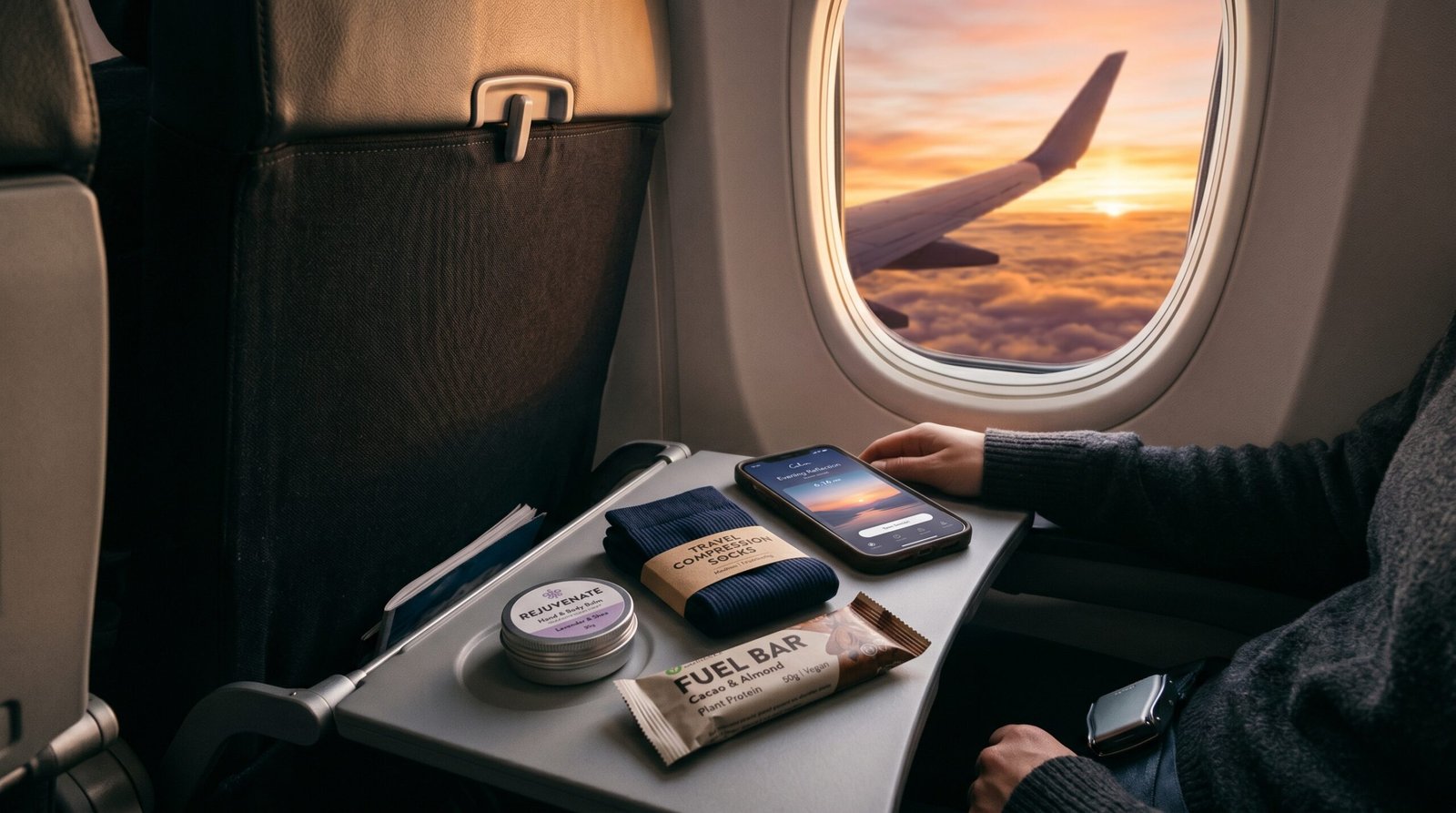
Ask someone who travels a few times a month what they have learned the hard way, and the wellness side of the answer comes up quickly. Disrupted sleep. Stiff joints from long flights. The low-grade anxiety that builds in airports and unfamiliar environments. The complete inability to fall asleep in a hotel room at a reasonable hour despite being genuinely exhausted.
Experienced travelers develop systems. Not elaborate ones, but practical collections of things that reliably help the body and mind hold up across time zones, terminal delays, and the cumulative grind of a life spent moving between places.
CBD oil tinctures have become a regular part of that kit for a growing number of frequent travelers. USDA certified organic options like the Joy Organics tincture range travel well in a small bottle, require no equipment, and address several of the most common complaints that frequent travel produces. More on that below. First, the full picture of what a well-built travel wellness kit actually looks like.
Electrolyte Packets
Dehydration is one of the most consistent problems with air travel and most travelers underestimate how significant it is. Cabin humidity in commercial aircraft typically runs between 10 and 20 percent, far drier than most indoor environments on the ground. The body loses more moisture than it takes in during a long flight even when drinking water regularly, and the effects compound quickly: fatigue, headaches, brain fog, and disrupted sleep all have dehydration as a contributing factor.
Electrolyte packets dissolved in water do more than plain water alone because they replace the sodium, potassium, and magnesium that the body loses along with fluids. Frequent travelers who keep these in their carry-on report feeling meaningfully better on arrival, particularly on flights longer than five hours. The packets take up almost no space and the quality options contain no added sugar.
A Quality Sleep Mask and Earplugs
This sounds basic, but the number of frequent travelers who still do not carry a proper sleep mask is surprising. The difference between a thin airline-issued eye cover and a contoured mask that actually blocks light completely is the difference between dozing and real sleep. For anyone trying to bank rest on a long-haul flight or sleep through a hotel room with inadequate blackout curtains, it matters considerably.
Earplugs or noise-canceling headphones address the other half of the equation. Deep sleep requires both darkness and reduced auditory stimulation. Cabin noise on a commercial flight sits around 85 decibels during cruise, enough to prevent the deeper sleep stages that produce genuine rest. A well-fitted pair of foam earplugs costs almost nothing and solves the problem effectively.
Magnesium Glycinate
Magnesium is one of the most commonly deficient minerals in the general population, and travel compounds the problem because stress, alcohol, and dietary changes all deplete it further. Magnesium glycinate, the form best absorbed by the body with the least digestive disruption, taken in the evening supports muscle relaxation, nervous system regulation, and sleep onset.
For travelers dealing with the muscle stiffness that follows long periods of sitting in cramped positions, magnesium also plays a direct role in muscle recovery. It is one of the most evidence-backed additions to a travel wellness kit and one of the least complicated to use. A small travel bottle of capsules lasts weeks and clears security without any issues.
CBD Oil Tinctures
CBD oil has moved from a niche wellness product to something that serious travelers keep alongside their other recovery tools, and the reasons are practical rather than trend-driven.
Travel produces a specific kind of stress that is difficult to address with willpower alone. The combination of schedule disruption, environmental change, time zone shifts, and the low-level overstimulation of airports and transit systems keeps the nervous system in a heightened state for extended periods. Cortisol, the body’s primary stress hormone, stays elevated in these conditions. That elevated baseline is what makes sleep on travel days genuinely difficult even when fatigue is high.
CBD interacts with the body’s endocannabinoid system in ways that support stress regulation and help bring cortisol back toward a normal baseline. A 2019 study in The Permanente Journal found CBD use was associated with reduced anxiety scores and improved sleep quality in the majority of participants within a month of use. For travelers, those two outcomes address the most common complaints directly.
The tincture format is particularly practical for travel. A 30ml bottle fits easily in a carry-on liquids bag, contains anywhere from 30 to 60 servings depending on dosage, and requires nothing beyond the dropper included with the bottle. Taken sublingually, meaning a few drops held under the tongue before swallowing, effects typically arrive within 15 to 45 minutes.
Travelers who use CBD tinctures most effectively tend to take them as part of a consistent wind-down routine on travel days: after reaching the hotel, as part of settling in, before attempting sleep in a new environment. The consistency of the ritual supports the effect. The body begins to associate the routine with rest, which matters when the environment itself offers none of the usual sleep cues.
When choosing a product, USDA certified organic and broad spectrum formulations are worth prioritizing. The Joy Organics tinctures fit that profile, with published third-party lab results and no THC, which matters for travelers who cross borders or are subject to any kind of substance screening.
For international travelers, it is worth noting that CBD regulations vary by country. CBD derived from hemp with less than 0.3 percent THC is legal in the United States and many other countries, but some destinations have different rules. Checking the regulations of your destination before packing is a sensible step, particularly for travel to countries with stricter cannabis-related laws.
Melatonin
Melatonin is the body’s natural sleep signal, produced in response to darkness to indicate that rest is approaching. Crossing multiple time zones suppresses melatonin production at the wrong times, which is the core mechanism behind jet lag. Taking a low dose of melatonin, typically between 0.5mg and 3mg, timed to the destination’s local nighttime helps reset the circadian clock faster than the body would manage on its own.
The key detail most travelers miss is that more is not better with melatonin. Higher doses do not produce deeper sleep. They produce grogginess and can actually disrupt the circadian reset that a lower dose achieves cleanly. Most of the melatonin products sold in pharmacies are significantly overdosed relative to what research supports as effective. Cutting a standard 5mg tablet or finding a low-dose product produces better results.
Compression Socks
Long periods of sitting in a pressurized cabin reduce circulation in the lower legs. Blood pools in the feet and calves, producing the swollen, heavy feeling that follows long-haul flights and contributes to the general physical discomfort of arriving after a day of travel. In people with certain risk factors, reduced circulation during long flights can contribute to more serious issues including deep vein thrombosis.
Compression socks apply graduated pressure to the lower leg that supports venous return and keeps blood moving despite extended sitting. They are not glamorous, but experienced long-haul travelers who have adopted them rarely go back. The difference in how legs feel on arrival after a 12-hour flight is significant. Medical-grade compression socks in the 15 to 20 mmHg range are appropriate for most healthy travelers.
Immune Support
Airports and aircraft are high-exposure environments. Recirculated cabin air, high-touch surfaces, and proximity to large numbers of people from different locations make travel one of the more reliable ways to encounter whatever is circulating at any given time. Frequent travelers who take their immune health seriously tend to keep a few tools in rotation.
Zinc lozenges taken at the first sign of exposure or symptoms have a reasonable evidence base for reducing the duration of common cold infections when started early. Vitamin D levels, which are directly linked to immune function and which a significant portion of the population is deficient in, are worth maintaining year-round rather than supplementing reactively. Elderberry extract has a smaller but growing body of research suggesting it may reduce the severity and duration of respiratory infections.
None of these are dramatic interventions. Together, maintained consistently, they reduce the frequency with which travel turns into a week of feeling unwell after returning home.
A Word on Building the Kit
The most effective travel wellness kits are not the most elaborate ones. They are the ones that actually get packed and used consistently. A few well-chosen items that address the specific challenges of travel, kept together so they travel as a unit, outperform an ambitious collection that gets left behind because it takes too long to assemble.
Electrolytes, sleep support, stress regulation, circulation, and immune maintenance cover the core of what travel disrupts. Starting there and adding based on personal experience produces a kit that genuinely earns its place in the bag rather than taking up space out of optimism.
The goal is arriving ready to actually be somewhere, not spending the first two days of a trip recovering from getting there.
A Note on CBD Legality
CBD derived from hemp containing less than 0.3 percent THC is legal at the federal level in the United States under the 2018 Farm Bill. However, individual state laws vary. A small number of states have additional restrictions on CBD products, and the legal landscape continues to evolve. Before traveling domestically with CBD tinctures, it is worth checking the current laws of any state you are passing through or traveling to.
Internationally, the picture is more varied. Many countries permit hemp-derived CBD, but others classify it alongside controlled substances regardless of THC content. Countries in Southeast Asia, the Middle East, and parts of Eastern Europe tend to have stricter regulations. If you are traveling internationally with CBD, research the specific laws of your destination and any transit countries before departure. Carrying documentation such as a certificate of analysis confirming THC levels and hemp-derived sourcing can be helpful in countries where questions may arise.
When in doubt, it is safer to leave CBD products at home and source them at your destination if they are legally available there, rather than risk complications at customs or border control.