
 By admin@handinhandadventures.com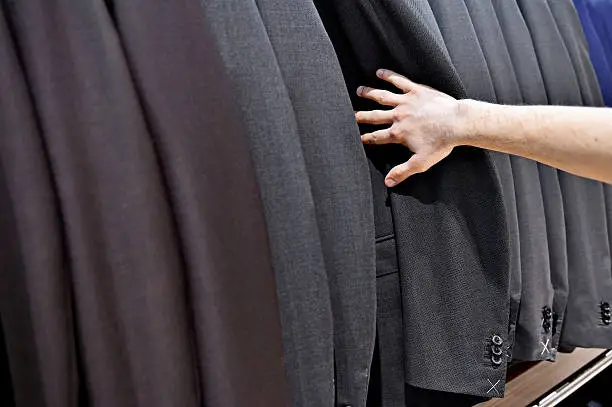
We spend a lot of time thinking about blazer colour and fit. But the material might be doing more communicative work than either of those things.
Every garment sends a signal. That much is not controversial. What is less often discussed is how much of that signal comes not from the cut, the colour, or even the label — but from the fabric itself. The way a jacket moves when you reach across a table. Whether it creases when you sit, or springs back as though nothing happened. Whether it drapes softly over the shoulder or holds a rigid, architectural line. These are textile decisions, and they communicate something specific about the kind of professional — and the kind of person — you are.
In 2026, with hybrid work now the settled norm rather than a transitional arrangement, the fabric conversation has become newly urgent. Men are no longer dressing for one context per day. They are dressing for three or four: the morning commute, the video call, the in-person client meeting, the dinner that follows. A garment that performs beautifully in one of those settings and fails in the others is not a workwear staple. It is a liability.
This is exactly why the question of fabric has moved from the back pages of tailoring guides to the front of mind for anyone who dresses with intention.
Consider what a structured wool blazer tells the room. It says: I have a designated place where I do formal things, and I am in it right now. The structure is the message. The canvas interfacing, the padded shoulder, the pressed lapel — all of it reads as deliberate formality, as a costume assembled for a specific occasion. That is sometimes exactly right. But it also carries an implication of rigidity, of compartmentalisation, of a working life organised into neat and separate boxes.
Now consider what a softer fabric communicates. When a jacket drapes rather than stands, when it moves with the body rather than imposing a silhouette upon it, the signal shifts. The garment says: I am equally at ease here as I am anywhere else. It says readiness without armour. It says, perhaps most valuably in the current professional climate, that you do not need the costume to do the work.
“The garment says: I am equally at ease here as I am anywhere else. Readiness without armour.”
This is not a minor semantic distinction. Research into how clothing affects both the wearer’s psychology and the perceptions of observers consistently finds that softness of garment correlates with perceived approachability, while structured clothing correlates with perceived authority. Neither is categorically better. But understanding which one you are projecting — and whether it matches what you intend — is something most men have never been given the language to think about.
The fabric that has quietly emerged as the answer to this dilemma is jersey. Initially associated almost exclusively with sportswear and casualwear, jersey has undergone a significant repositioning over the past several years, driven largely by the work-from-anywhere generation’s refusal to accept that comfort and professionalism are mutually exclusive values.
What jersey offers that woven tailoring fabrics cannot is a kind of physical honesty. It does not pretend to be formal. It does not try to simulate a structure that the wearer’s day will immediately undo. Instead, it offers something more sophisticated: a garment that looks intentional and put-together while acknowledging that the person inside it is a human being who moves, travels, sits for long stretches, and exists in multiple environments throughout a single day.
The mens jersey blazer has become the garment that most accurately reflects how professional men actually live now — not how a mid-century dress code imagined they should. It is not a compromise between formal and casual. It is a third thing entirely: a tailored silhouette built from a fabric whose defining property is responsiveness.
There is also something worth saying about what the rise of jersey in tailoring reveals about broader shifts in how professional credibility is understood. For a very long time, the markers of workplace seriousness were deliberately uncomfortable. The starched collar. The heavy wool suit in August. The tight dress shoe. Discomfort was the point — it signalled that you had submitted yourself to a standard, that the standard mattered, that you were the kind of person who prioritised the institution over your own body.
That logic has not simply become unfashionable. It has become strategically counterproductive. In a working culture that prizes cognitive flexibility, creative problem-solving, and sustained energy across long hours, the idea that physical restriction enhances performance has been quietly abandoned. Comfort, properly understood, is now a productivity decision as much as a personal preference.
Jersey reads that shift accurately. It says: I understand what the work actually requires, and I have dressed for that. Not for the performance of effort, but for the effort itself.
The next time you pull on a blazer, it is worth pausing for a moment before you assess the colour or check the fit. Run a hand down the sleeve. Notice what the fabric does. Does it hold a shape that your day will immediately contest? Or does it meet you where you are, and move accordingly?
The room will notice that answer long before anyone processes the rest of the outfit. Fabric is the first thing the eye reads and the last thing the conscious mind credits. Which is precisely why it matters so much, and why so few people think about it carefully enough.