
 By admin@handinhandadventures.com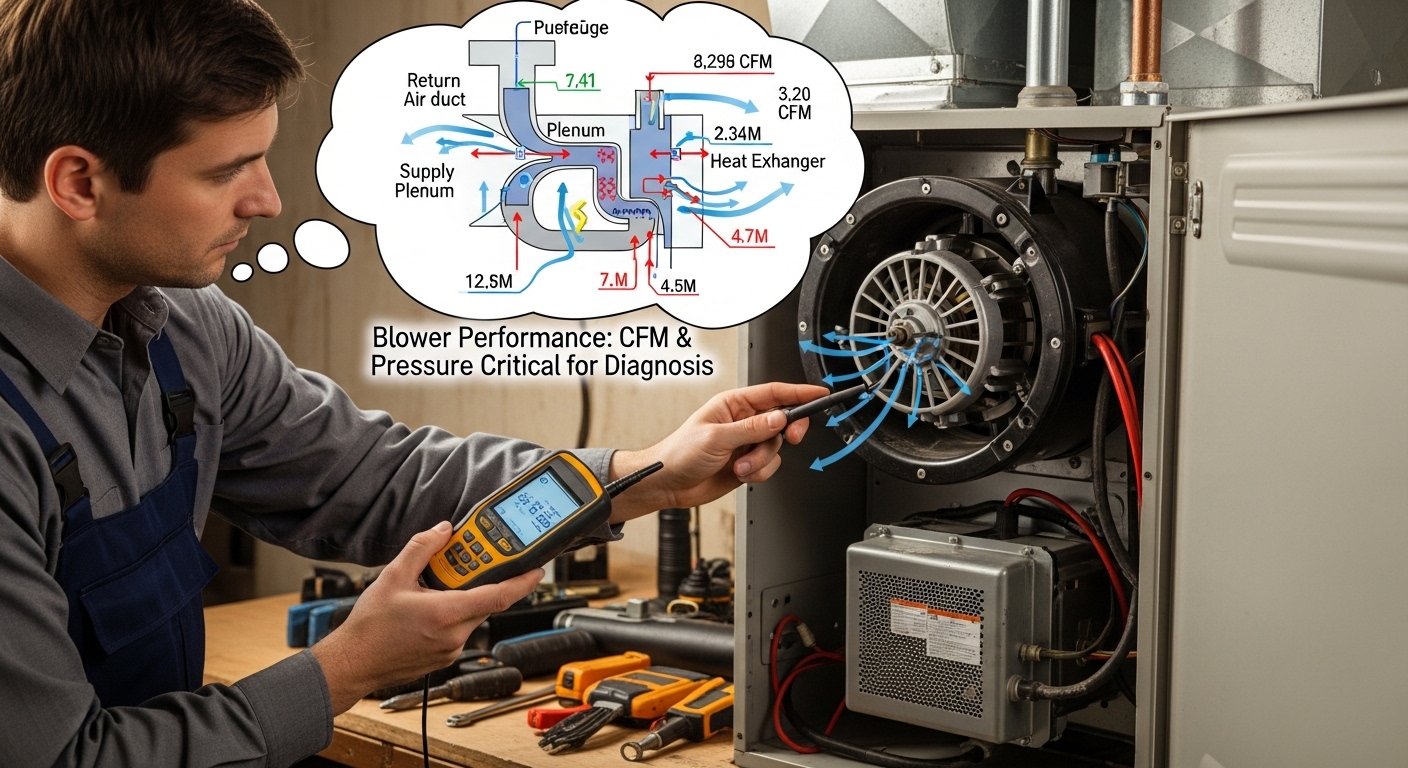
A furnace can be running, burners can be active, and the thermostat can be calling for heat, yet the building still feels cold. That disconnect often leads people to focus on the heat source itself. In many cases, however, the issue is not how heat is produced but how it is moved. That is where blower performance becomes central to furnace diagnostics.
Why Blower Performance Is Often Overlooked
-
How Air Movement Defines Heating Results
Blower performance rarely gets the same attention as burners or ignition systems, yet it plays a defining role in how a furnace actually delivers heat. The blower pushes air across the heat exchanger and distributes it through the duct system. If that movement is weak, inconsistent, or restricted, the system may produce heat but fail to deliver it effectively. For property managers and building owners, that means comfort complaints, rising energy use, and a furnace that appears to be working but fails to achieve the expected result.
-
How Blower Function Connects To System Output
A furnace is designed around a balance between heat generation and airflow. The blower maintains that balance. When airflow is correct, the heat exchanger efficiently transfers energy to the airstream, and that heat is carried into occupied spaces. In service areas such as Woodbridge, technicians often emphasize that even a properly firing furnace can underperform if blower performance is compromised. That is because insufficient airflow reduces the amount of heat leaving the unit, while excessive restriction can cause the system to overheat and shut down burners prematurely.
-
What Happens When Airflow Drops Too Low
When blower performance declines, the effects show up quickly. Airflow may be reduced because of a failing motor, a dirty blower wheel, incorrect speed settings, or excessive resistance in the duct system. As airflow drops, the heat exchanger can overheat, triggering safety limits that shut off the burners. The blower may continue running, but the air being delivered will feel cooler than expected. From the outside, it can look like the furnace is cycling normally. In reality, the system cannot maintain stable heating because the airflow no longer supports it.
-
Why Static Pressure Is Part Of The Picture
Blower performance is closely tied to static pressure within the duct system. Static pressure measures how much resistance the blower must overcome to move air. High static pressure can indicate restricted ducts, undersized returns, blocked filters, or closed dampers. When pressure rises beyond what the system is designed to handle, the blower struggles to maintain proper airflow. This affects both comfort and equipment reliability. In diagnostic work, measuring static pressure helps determine whether the blower is underperforming due to its own condition or because the duct system is limiting its performance.
-
How Blower Issues Mimic Other Problems
One of the challenges in furnace diagnostics is that blower-related issues can look like other problems. Weak airflow can resemble a failing heat exchanger, poor burner output, or thermostat trouble. Short cycling can appear to be a control issue when it is actually caused by overheating due to restricted airflow. Uneven heating across rooms may seem like a duct-balancing problem when the blower cannot maintain consistent airflow. That is why blower performance is often checked early in a thorough diagnostic process. It helps confirm whether the system’s core air movement is functioning as expected.
-
Why Blower Condition Matters Over Time
Blower assemblies experience wear over time. Motors can weaken, bearings can degrade, and accumulated dust on the blower wheel can reduce efficiency. Even small changes in performance can have a noticeable effect on heating. A blower that is slightly underperforming may not cause immediate failure, but it can gradually reduce comfort and increase strain on other components. For building owners, this often shows up as longer run times, higher utility costs, and rooms that never quite reach the desired temperature, even when the furnace operates continuously.
What Property Owners Should Take Away
Blower performance plays a critical role in furnace repair diagnostics because it determines whether heat is delivered as intended. A furnace that generates heat without moving it properly cannot maintain comfort, no matter how well other components function. For property managers and building owners, recognizing the importance of airflow helps shift the focus from isolated parts to overall system performance. A thorough diagnostic process should always include blower evaluation, not as an afterthought, but as a key factor in explaining why a furnace may be running yet failing to meet the needs of the space it serves.