
 By admin@handinhandadventures.com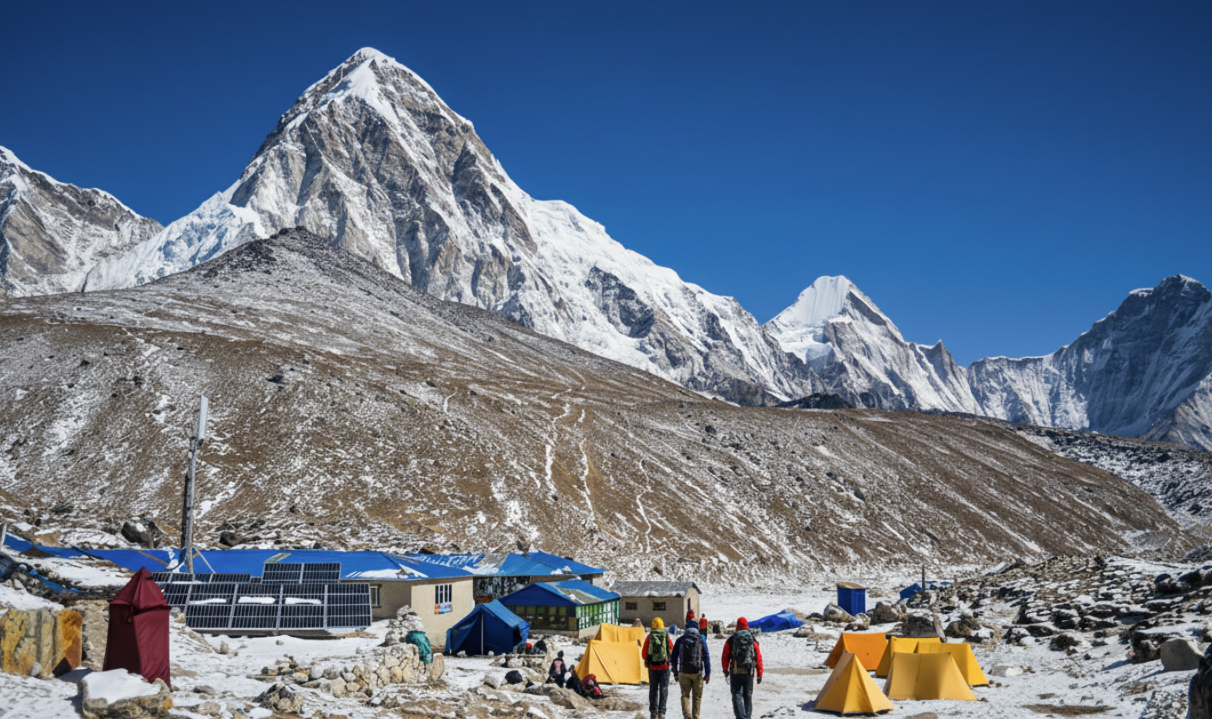
Thousands of trekkers come yearly to experience the dream of being at the bottom of the highest mountain in the world, Mount Everest. Nevertheless, it is not just about the thrill of reaching Everest Base Camp. Success is dependent on proper preparation.
This adventure is underestimated by many, and the fact is that the trek enables you to reach the very high altitude, remote villages in the mountain and weather alternation. This is the reason why getting to know how to prepare for the Everest Base Camp Trek is very crucial, even prior to making a reservation of the flight.
The Everest Base Camp Trek is at an altitude of 5,364 meters (17,598 ft), which is far higher than most people have ever been. With this height, there is a lot less oxygen in the air, your body gets exhausted easily, and even walking is challenging.
Training for the Everest Base Camp Trek and packing tips make the experience safer, more comfortable, and far more pleasant.
Understanding the Physical Challenge of the Trek
You need to properly know what your body will experience before you begin to prepare. The Everest Base Camp Trek is not a technical climbing expedition, yet it is physically challenging. You are going to walk for quite a few days in a row, typical of five to seven hours a day. These paths have long ascending routes, descending routes, stone steps, suspension bridges and rough rock paths.
The trek typically begins at Lukla, at an elevation of 2,860 meters (9,383 feet). There, you slowly ascend greater heights through Namche Bazaar with a height of 3,440 meters (11,286 feet), Tengboche with a height of 3,860 meters (12,664 feet), Dingboche with a height of 4,410 meters (14,469 feet), Lobuche with a height of 4,940 meters (16,207 feet) and then Everest Base Camp with a height of 5,364 meters.
Kala Patthar is also another spot hiked by many trekkers at 5,545 meters (18,192 feet), which provides the ultimate view of Mount Everest. A gradual increase in height has to be prepared by your body.
This is the reason why you should start with serious training for the Everest Base Camp Trek at least two or three months before you set out.
Training for Everest Base Camp Trek: Building Stamina
The vital section of the training for the Everest Base Camp Trek is the enhancement of stamina. On the journey, the heart and the lungs labour more due to the thin air. Cardiovascular exercises aid your body in the use of oxygen.
Exercises such as brisk walking, jogging, cycling, swimming and hiking are very good. Attempt to work out four to five days a week. Begin with shorter sessions and increase the time.
One of the goals that can be achieved is to comfortably perform one hour or 45 minutes of continuous cardio exercise. Walking uphill or up the stairs, when possible, is also advisable, as the trail on Everest has a lot of steep climbs.
It is also extremely useful to take a long walk with a backpack. Walk and carry 5 to 7 kilograms. This will accustom your body to the effort required on the trek and is also one of the best forms of training for the Everest Base Camp Trek.
Strength Training for Mountain Trails
In order to learn how to prepare for the Everest Base Camp Trek, cardio fitness is not sufficient. Your muscles should be well-built too. Good legs, hips, and core muscles are useful in walking up a hill with less effort and prevent knee damage when walking down a hill.
Squats, lunges, step-ups and wall sits are exercises that make legs strong. Single planks and easy core exercises enhance balance that is valuable on rough and uneven trails. Attempt to do strength training two or thrice a week.
Several trekkers would experience more pain when walking down the mountain than when walking up it. Downhill walking strains your knees and thighs. Strength training eases this load and decreases your chances of being injured, and makes your training for the Everest Base Camp Trek far more productive.
Mental Preparation Matters Too
Fitness is cool, yet one also needs the psychological strength in case he or she considers going to the Everest Base Camp Trek. The journey may be tedious and exhausting. The weather can change suddenly. In some cases, the flights to Lukla are held back. In high altitudes, headaches, loss of appetite, and poor sleep might occur.
Staying positive helps a lot. Realise that it is normal to walk slowly. Rest days are part of the plan. Suffering does not imply failure. Patient and calm trekkers tend to enjoy the ride. Training based on the Everest Base Camp Trek needs to include mental preparation, which is a major aspect that most people forget.
Acclimatisation and Altitude Awareness
Altitude sickness is one of the largest threats to the Himalayas. The less oxygen that is available, is what your body requires time to adapt to it as you climb higher. Good itineraries will also involve acclimatisation days, particularly in Namche Bazaar, with 3,440 meters (11,286 feet) and Dingboche, 4,410 meters (14,469 feet) elevation.
Knowing how to prepare for the Everest Base Camp Trek is knowing how to listen to your body. Such symptoms as headache, nausea, dizziness and extreme tiredness are not to be overlooked. The best methods to be safe are walking slowly, taking plenty of water and ascending uphill in small steps.
Packing Tips for Everest Base Camp Trek: Clothing Layers
The weather in the Everest area is unpredictable. Mornings can be sunny, afternoons windy and evenings freezing. That is why the layering system is necessary.
Begin by wearing a moisture-wicking base layer so that your skin does not get sweaty. Wear a warm middle layer like a fleece. The last thing is an insulated jacket, typically down, needed on chilly evenings in elevated places such as Lobuche at 4,940 meters (16,207 feet). An outer jacket will shield you against rain and snow, and it is waterproof and windproof.
The given Packing Tips of the Everest Base Camp Trek will make sure that you are not cold and do not carry extra weight.
Choosing the Right Footwear
One of the most significant things to consider in learning how to prepare for the Everest Base Camp Trek is your boots. Select good and comfortable trekking shoes covering your ankles. Before the trek, they need to be well broken in. Don’t take a new pair of boots to the Himalayas.
Trekking Socks (wool or synthetic) are also used to avoid blisters and keep feet warm in high altitudes, such as in the Everest Base Camp at 5,364 meters (17,598 feet). One of the components of Packing Tips to Everest Base Camp Trek is proper shoes.
Essential Gear for High Altitude
In addition to clothes, there is certain equipment required to provide comfort and safety. It is essential to have a sleeping bag that has cold ratings because sometimes nights can be as low as -10F at 5,164 meters (16,942 feet) near Gorakshep. UV protection sunglasses will be needed as the sun in the snow and at high altitude is very strong.
Refillable water bottle, purification tablets, trekking poles, headlamp, sunscreen and lip balm are essential. Such everyday tips on Packing for the Everest Base Camp Trek would simplify life on the trail.
Managing Weight and Backpack
Considering how to prepare for the Everest Base Camp Trek, it is important to remember that each additional kilogram will be even heavier when at high altitude. Attempt to ensure that your main duffel bag does not exceed the porter’s weight limit and bring daily necessities in your backpack.
Water, snacks, additional clothes, rainwear and personal effects are some of the essential items that should be carried in your daypack. Smart packing helps to decrease fatigue and make the journey more comfortable.
Nutrition and Hydration Preparation
Get used to better eating habits before the trek. A balanced diet assists in the energy accumulation towards training for the Everest Base Camp Trek. One of the things you will consume during the trek is rice, noodles, soups and vegetables. Cold weather burns a lot of calories, and so does an altitude.
Consume a lot of water each day. Loss of water is a risk factor for altitude sickness. Good hydration is one of the ignored aspects of how to prepare for the Everest Base Camp Trek.
Final Thoughts on Preparation
The human experience of making it to the Everest Base Camp (5,364 meters or 17,598 feet) is a life-altering event, and the success is a factor of preparation. Everest Base Camp Trek Proper Training is a strength, stamina, and confidence-building exercise. Packing Tips will make you safe, keep you warm, and comfortable in the mountain conditions.
To know how to prepare for the Everest Base Camp Trek is to respect the mountains, listen to your body and have a plan. And with proper preparations, the trip is not just feasible, but it is memorable.
Read more: https://myeveresttrip.com/trip/everest-base-camp-trek/