
 By admin@handinhandadventures.com
Traditional pump bottles often get sticky and spread bacteria from one person to the next. Alternatively, automatic soap dispensers cut down on mess and stop microbes from spreading between family members at home.
Our touchless models at Made Minimal release the right amount of soap every time without manual pumping. Plus, they run on standard batteries and fit any bathroom or kitchen layout without complicated installation.
This article will cover how automatic soap dispensers are perfect for families with young children. You’ll also find differences between foam and liquid models, practical placement tips, and how to fix common issues with a dispenser.
Let’s find out which touchless option fits your household best.
Touchless Dispensers Improve Hygiene for Family Homes
Automatic soap dispensers remove the need to touch germ-covered pump bottles between hand washes. That alone reduces the spread of bacteria when you’ve got several people sharing one bathroom.
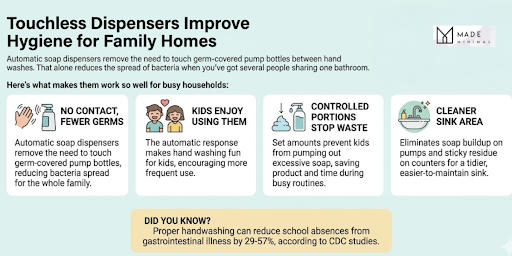
Here’s what makes them work so well for busy households:
- No Contact Means Fewer Germs: The sensor picks up movement and dispenses soap without anyone grabbing a slippery, bacteria-covered surface. Especially when one kid has a cold, the last thing you need is everyone else catching it from the soap dispenser.
- Kids Enjoy Using Them: The automatic response is fun enough that kids wash their hands more often without reminders. They can simply wave their hand under the sensor, and soap comes out.
- Controlled Portions Stop Waste: These dispensers release set amounts, so kids can’t pump out half the bottle per wash. It also saves time during morning routines when you’re trying to get all the kids out the door.
Once you install one, you’ll notice how much cleaner the area around your sink stays. There’s no more soap buildup on the pump head or sticky residue on the counter.
Did You Know? Studies from the CDC have found that proper handwashing can lower school absences related to gastrointestinal illness by 29–57%. That’s why consistent handwashing habits are important to reduce the spread of illness in your family.
Picking Your Automatic Soap Dispenser in Australia
You have to think about how your family uses soap before buying. Some households go through litres every month, while others need something compact that doesn’t take up much bench space. Either way, the right dispenser saves money on wasted soap and cuts down on refill trips.
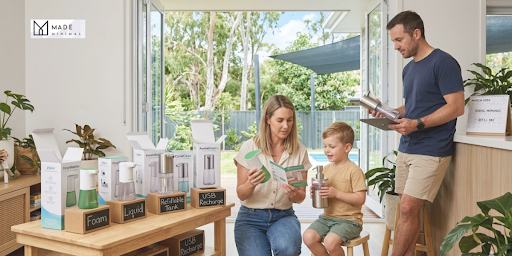
Take a look at what to consider when choosing an automatic soap dispenser in Australia.
Foam Soap Dispenser Automatic vs Liquid Models
Foam versions use less soap per pump and rinse off faster for younger children. Because the bubbles are already there, kids don’t spend ages trying to lather up the soap. Many Brisbane families with younger kids prefer foam for bathrooms since it’s gentler and easier to rinse.
On the other hand, liquid models work with most soap products and cost less to refill long-term. So you’re not locked into buying specific cartridges or foam formulas. Usually, liquid works better for greasy kitchen cleanup after cooking.
From our experience, some families use foam in bathrooms and liquid in the kitchen since different requirements need different products.
Battery Life is Important with Multiple Kids
Four AA batteries typically last 2-3 months with heavy family use across multiple daily washes. That’s based on households where the dispenser gets used 15-20 times per day.
On the other hand, rechargeable USB models save money but need charging every few weeks, depending on household size (and you always forget until it runs dry mid-wash).
Although battery indicator lights can help you avoid running out during busy school mornings. You can swap them before they’re completely dead, and you won’t get caught with soapless hands halfway through washing up.
Tank Size for High-Traffic Households
Tank capacity is an important factor to consider, and we’ve seen many people miss this. In general, smaller 250ml tanks need weekly refills in homes with 3+ children using the dispenser regularly.
So if you’re constantly topping up soap, you’ll need something larger. In that case, 400ml or larger tanks offer a more practical option. They reduce refill frequency to once per month for most families, which means less hassle overall.
Bonus Tip: Transparent tanks let you see soap levels at a glance before running empty. You can tell when you’re getting low and add it to the shopping list before it runs out completely.
Installation and Placement: Kitchen Accessories That Fit
Once you’ve picked your model, placement determines how well it works for your household. The wrong spot means the dispenser gets knocked over, triggers accidentally, or sits too far from where people wash their hands. That said, getting the location right from the start saves time on counter cleaning and stops you from moving it around later.
Here’s what works best for kitchens and bathrooms.
Mounting Options for Busy Kitchen Sinks
Wall-mounted models free up bench space but require drilling into tiles or splashbacks. You’ll need to commit to a permanent spot, which works well if your sink area stays consistent.
Meanwhile, countertop versions move easily but take up room near dish racks and prep areas. They’re better for renters or anyone who doesn’t want to drill holes. The trade-off is that they can accidentally get knocked around when you’re clearing dishes or wiping down surfaces.
Pro Tip: Measure your sink surround before buying to confirm that the dispenser base fits the available space. Most products need at least 10cm of clear counter space to sit properly without tipping over.
Bathroom Counter Space Considerations
Shared bathrooms need dispensers positioned where all family members can reach them comfortably (especially with toddlers who can’t reach high placements yet). With that in mind, placing it near the tap reduces drips across the counter when kids move between the dispenser and the water. The closer these two are, the less mess you’ll clean up afterwards.
However, avoid spots directly under mirrors where splashes from washing activate the sensor and cause unwanted pumps. It’s best to position it slightly to the side of the tap instead of directly underneath any overhead fixtures. Also, when trying to place the unit, test the sensor range first to avoid this problem.
Common Issues and Quick Fixes for Electric Dispensers
Most dispenser problems take under two minutes to fix without calling anyone. For instance, the sensor might stop responding, the pump could weaken, or foam dispensers occasionally clog with the wrong soap type.
Let’s see how each of these issues has a straightforward fix:
- Sensor Stops Responding: This happens when soap residue builds up on the nozzle or detection window. The buildup blocks the infrared beam that detects your hand. Simply wipe the sensor area with a damp cloth and dry it completely.
- Weak Pumping Action: Weak pumping usually means low batteries rather than mechanical failure, so swap them to fresh batteries first. If it still doesn’t work after changing batteries, check that the soap hasn’t dried and clogged the pump mechanism.
- Clogs from Watered-Down Soap: Watery soap can clog foam dispensers since they’re designed for thicker formulas (not worth the frustration when proper foam soap costs barely more). Regular liquid soap diluted with water will gum up the works. Even better, use only foaming products designed for automatic models.
You can solve most of these problems by yourself once you know what to look for. It’s a good practice to keep spare batteries on hand and use the right soap products. That way, you can expect to resolve minor issues quickly without frustration.
Time to Make Handwashing Easier
Automatic soap dispensers reduce daily cleaning around sinks while improving hygiene for families. Touchless operation also stops bacteria from spreading between kids and prevents soap waste during rushed mornings.
Ultimately, upgrading to automatic models takes the hassle out of supervising kids while keeping your household cleaner. When you’re ready to place an order, you’ll find models suited to different household sizes and needs. The right model depends on your family size, counter space, and whether foam or liquid suits your needs.
Not to mention, installing one in both the kitchen and bathroom creates consistent handwashing habits across your home. Made Minimal stocks quality touchless dispensers and other practical products that offer solutions for Australian family homes on our website.