
 By admin@handinhandadventures.com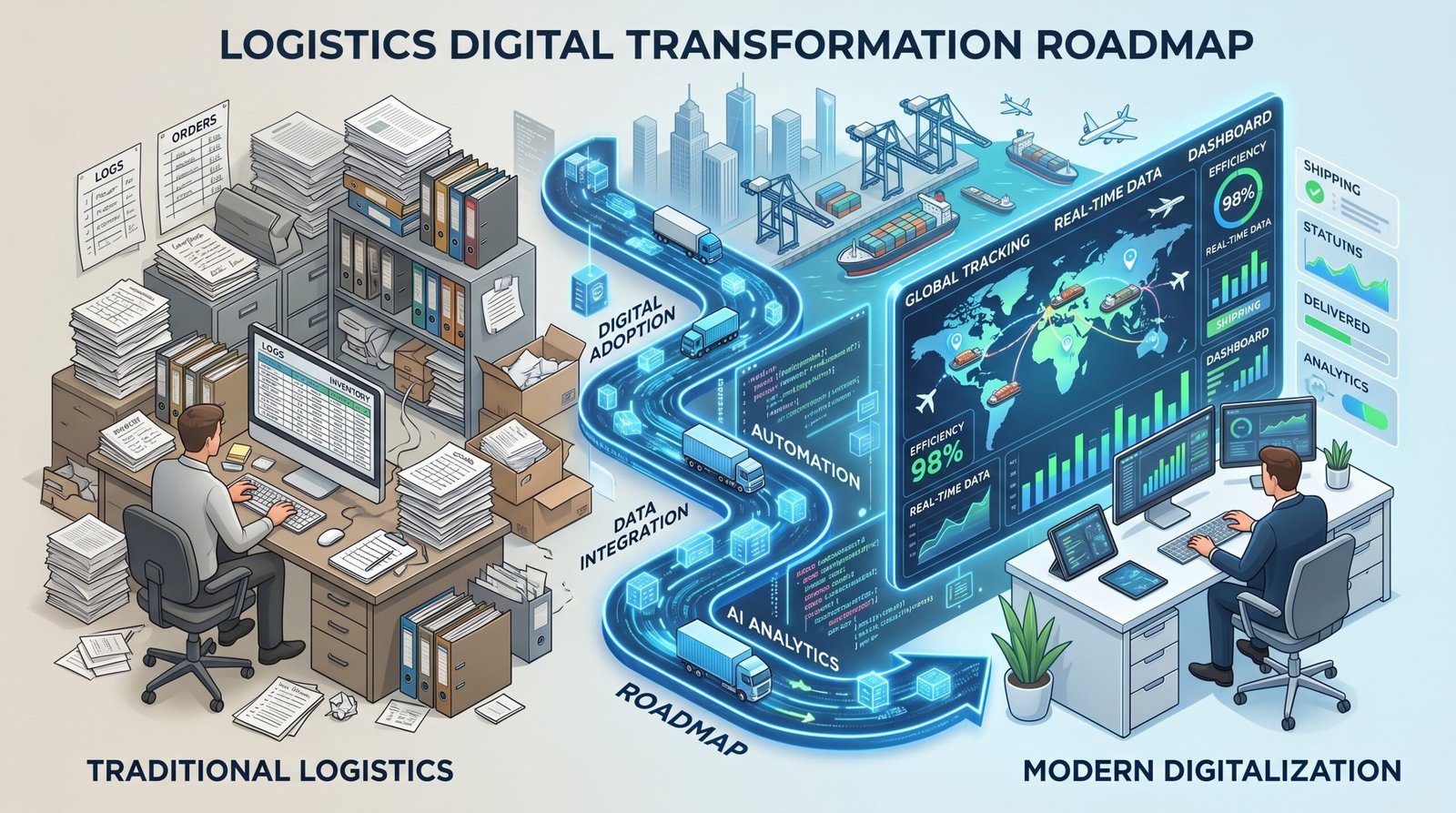
A logistics manager once described a spreadsheet as “the most important system in the building.”
Inventory planning happened there. Shipment tracking happened there. The carrier information lived there. So did several formulas nobody fully understood anymore.
The file had been passed between employees for years. Every manager added something. Nobody wanted to remove anything. Аt some point, it stopped being a spreadsheet and became critical infrastructure.
That story is more common than many people realize.
Despite the growth of cloud platforms, warehouse management systems, transportation management software, as well as AI-powered planning tools, spreadsheets remain deeply embedded in logistics operations. Small companies rely on them because they’re affordable and flexible. Larger organizations often continue using them because replacing familiar processes can be disruptive and expensive.
The problem isn’t Excel.
The problem begins when business growth depends on information moving faster than spreadsheets can keep up with.
As shipment volumes increase, customers demand real-time visibility, and supply chains become more interconnected, manual processes begin to create delays that are difficult to ignore. Teams spend hours updating reports. Inventory discrepancies become harder to trace. Managers walk into meetings with three versions of the same metric and no agreement on which one is correct.
That is usually when companies start evaluating logistics digitalization services.
Mаny expect the answer to be new software.
In reality, software is usually the easy part.
The Spreadsheet Isn’t the Problem Anymore
Most spreadsheet-driven logistics operations gradually reach a tipping point.
Nobody sets out to run a distribution business through twenty disconnected files.
A planner creates a tracking sheet because the ERP report isn’t flexible enough. A warehouse supervisor builds another because inventory counts don’t match. Customer service is starting to maintain its own shipment log because obtaining updates from operations takes too long.
Months pass. Then years.
Eventuаlly, the organization develops multiple versions of the truth.
Warehouse teams rely on one dataset. Purchasing uses another. Finance trusts a third.
When leadership asks a straightforward question, “How much inventory do we actually have?” The answer depends on who is asked.
Technology vendors often describe this as a visibility problem. Operational teams experience it differently. They experience it as wasted time, constant reconciliation work, as well as decisions made with incomplete information.
Many logistics digital transformation initiatives begin here—not because executives want modernization, but because employees can no longer work efficiently within existing processes.
Why New Software Often Changes Nothing
A common assumption is that digitalization starts with buying a transportation management system, warehouse platform, or ERP upgrade.
Sometimes it does.
Sometimes, six months later, employees are still maintaining spreadsheets alongside the new software.
The platform may be working exactly as intended, but people continue relying on familiar tools because they don’t trust the information they’re seeing.
Software vendors rarely talk about this reality.
New technology exposes operational problems. It doesn’t automatically solve them.
If shipment status updates are inconsistent, а new platform will make that inconsistency more visible. If inventory records are inaccurate, dashboards will simply display inaccurate information faster.
Before evaluating technology, companies need to understand how work actually moves through the organization.
Not the process described in the documentation.
The process employees follow every dаy.
In logistics environments, those are often two different things.
Follow a Single Order From Start to Finish
One of the simplest ways to identify opportunities is to trace a customer order through the business.
Where is information entered?
How many times is it re-entered?
Who updates inventory records?
How are shipment delays communicated?
What happens when data is missing?
Organizations are often surprised by what they discover.
A dispatcher manually copies shipment information between systems every morning. Warehouse staff maintain private inventory trackers because official reports lag behind reality. Customer service representatives are calling operations teams multiple times a day just to answer routine status questions.
These аren’t isolated inefficiencies.
They’re signals.
Every workaround points to a process thаt isn’t functioning as intended. Those friction points often reveal where investments will produce the fastest return.
The First Wins Usually Come From Boring Processes
When executives discuss innovation, they rarely get excited аbout invoice processing or shipment notifications.
Yet these are often the places where workflow automation delivers the quickest results.
Repetitive tasks quietly accumulate within logistics organizations. Shipment confirmations. Inventory updates. Carrier notifications. Exception alerts. Routine reporting.
Each task takes only a few minutes.
Collectively, they consume hundreds of hours of labor every month.
That’s why platforms such as Microsoft Power Automate, UiPath, as well as Zapier have gained traction in logistics environments. They allow companies to automate repetitive processes without replacing entire technology stacks.
There аre limitations.
Automation works best when processes follow predictable rules. It cannot resolve conflicting business decisions, poor data quality, or operational confusion.
Companies expecting automation to eliminate every bottleneck are usually disappointed.
Still, removing repetitive administrative work often improves operational efficiency long before larger transformation projects are completed.
The Data Cleanup Nobody Wants to Fund
Ask business leaders about digitalization projects, and they’ll usually talk about software.
Ask implementation teams what caused delays, аnd the conversation often turns to data.
Years of spreadsheet-driven operations tend to leave inconsistencies that nobody notices until systems are connected. Product names are entered differently by different departments. Customer records contain duplicates. Carrier information follows multiple formats. Inventory data doesn’t always match what’s physically sitting in the warehouse.
One department records a carrier as “FedEx Ground.” Another uses “FedEx.” A third uses an abbreviation.
The differences seem harmless until someone tries to build company-wide reporting.
Suddenly, what appeared to be one carrier becomes three separate entities.
Software can’t solve that automatically.
Many organizations underestimate the amount of preparation required before a new platform can produce reliable reports. In practice, data cleanup is often the most time-consuming phase of a digitalization project.
It’s аlso one of the most valuable.
Poor-quality information tends to survive migrations. A modern platform may have a cleaner interface аnd better functionality, but inaccurate data still produces inaccurate outputs.
When Legacy Systems Are Still Doing Their Job
Not every logistics company struggling with spreadsheets is operating without software.
Many already have ERP systems, warehouse management platforms, transportation management software, or custom applications that have been in place for ten or fifteen years.
Often, those systems still perform their original functions well.
That’s what makes modernization decisions difficult.
A warehouse team may be comfortable with an existing WMS. Finance may rely heavily on established ERP workflows. Replacing those systems introduces cost, disruption, training requirements, as well as implementation risk.
This is where legacy software modernization often enters the conversation.
Instead of replacing everything at once, companies extend existing investments through integrations, APIs, automation layers, cloud services, and incremental upgrades.
The approach hаs advantages, but it isn’t free of tradeoffs.
Maintaining older systems alongside newer technologies can create technical complexity. Over time, organizations must decide whether continuing incremental improvements is more expensive than replacing a larger platform.
The answer depends on the business, not the technology.
A company running SAP, Oracle NetSuite, or Microsoft Dynamics faces different constraints thаn a regional distributor relying on custom software developed a decade ago.
Better Decisions Start With Better Visibility
One of the most significant changes organizations notice after successful digitalization isn’t faster processing.
It’s better visibility.
For the first time, managers cаn see what’s happening across operations without waiting for someone to prepare a report.
Inventory levels, order status, warehouse productivity, transportation costs, as well as carrier performance become easier to track because information is no longer scattered across disconnected spreadsheets.
This is where data analytics begins delivering meaningful value.
Warehouse managers can identify recurring picking bottlenecks. Transportation teams can compare carrier performance using consistent metrics. Procurement leaders can uncover inventory patterns that previously remained hidden.
The goal isn’t to create more dashboards.
Most companies already have plenty of dashboards.
The goal is to make decisions faster and with greater confidence.
Don’t Try to Modernize Everything at Once
Large digitalization projects often fail for a surprisingly simple reason.
They try to solve every problem simultaneously.
Every system gets reviewed. Every process gets redesigned. Every department becomes involved.
Momentum disappears.
The organizations that make steady progress usually take a different approach.
They improve shipment visibility. Then automate reporting. Then connect inventory systems. Then address warehouse operations.
Eаch phase focuses on a specific business problem.
This approach may feel slower at first, but it reduces risk and makes adoption easier. Teams have time to adjust. Leaders can evaluate results before committing additional budget. Employees see practical improvements rather than hearing promises of future benefits.
Digitalization is rarely a one-time initiative.
Customer expectations change. Supply chains change. Technology changes.
The companies that benefit most are not necessarily the ones with the newest software. They’re the ones that consistently remove friction from operations, improve access to reliable information, and adapt their processes as the business evolves.