
 By admin@handinhandadventures.com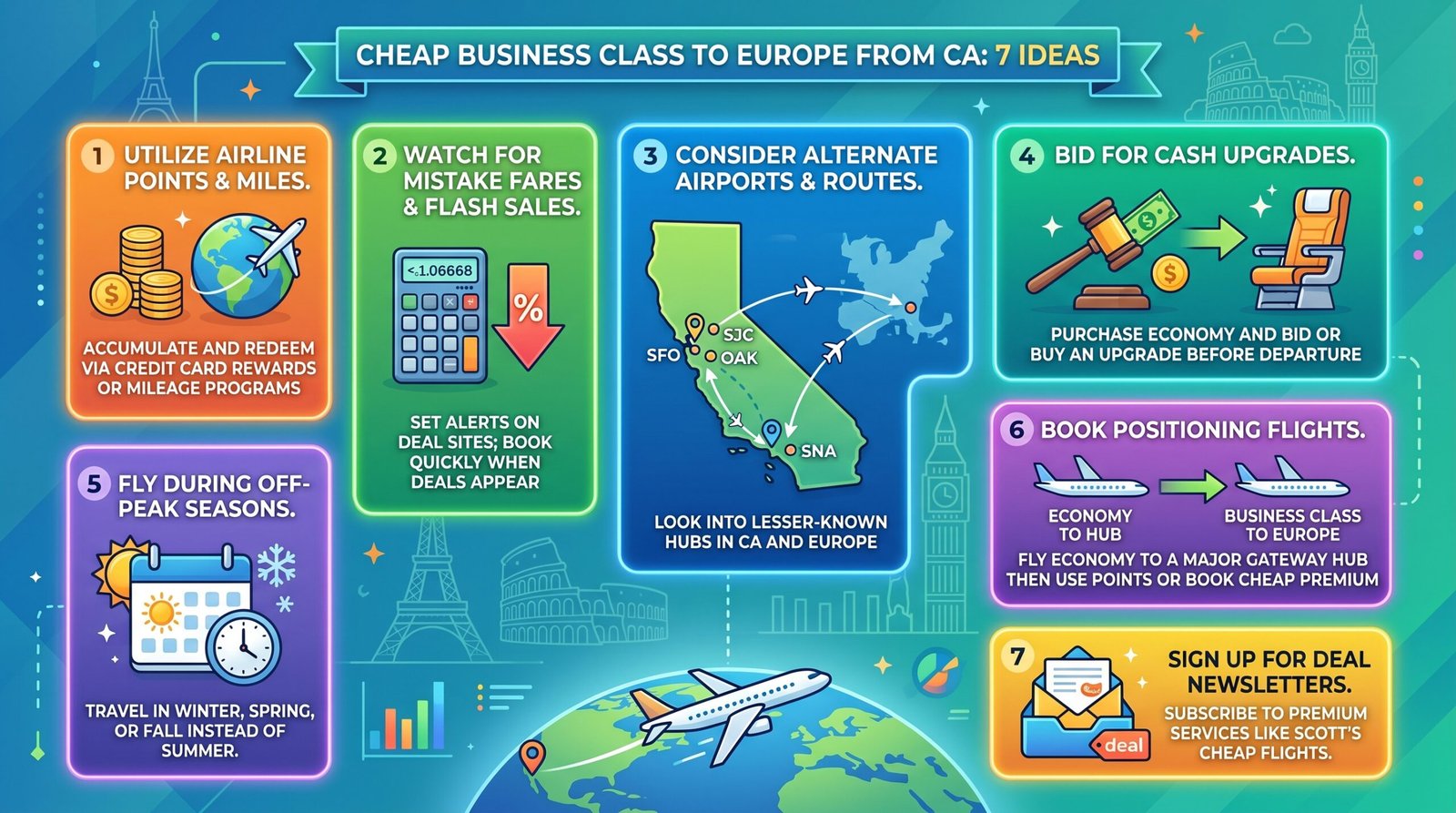
Flying business class from California to Europe doesn’t have to cost a fortune. While many travelers assume prices always sit in the $4,000–$6,000 range, the reality is very different. With the right approach, it’s possible to consistently find fares between $1,200 and $2,500—and sometimes even less.
The key isn’t luck. It’s understanding how pricing works and using a few smart strategies together.
Below are seven proven ideas that can dramatically reduce the cost of your next business class flight.
1. Be Flexible With Your Travel Dates
If there’s one factor that matters more than anything else, it’s flexibility.
Airline pricing is dynamic. The exact same seat on the exact same flight can vary by thousands of dollars depending on the day you choose to fly. Even shifting your departure by one or two days can unlock much lower fares.
Midweek flights—especially Tuesday and Wednesday—tend to be the cheapest. Weekend departures, particularly Fridays and Sundays, are often the most expensive because they align with both business and leisure demand.
Seasonality also plays a major role. Summer months, holidays, and peak tourist seasons push prices up. On the other hand, shoulder seasons like early spring and late autumn are often significantly cheaper.
The biggest mistake people make is locking into specific dates too early. Instead, search across a full month and identify the lowest-priced days before committing.
2. Use Points and Miles Strategically
One of the most powerful ways to reduce the cost of business class is by using airline miles or transferable credit card points.
This is how experienced travelers regularly fly business class for a fraction of the normal price. Instead of paying cash, they redeem points for premium seats that would otherwise be unaffordable.
The key is understanding how to maximize value:
- Transfer points to airline partners instead of booking through generic portals
- Look for “award availability” rather than fixed-price tickets
- Take advantage of transfer bonuses when available
With the right approach, a business class ticket that normally costs $3,000–$5,000 can effectively cost the equivalent of $800–$1,200 in points.
This isn’t a loophole—it’s how airline loyalty systems are designed to work for those who understand them.
3. Set Alerts and Track Price Drops
Business class deals don’t stay available for long. When prices drop, they can disappear within hours.
That’s why manually checking prices occasionally isn’t enough. You need to set alerts for your routes—such as Los Angeles to Paris or San Francisco to Rome—and let systems monitor prices continuously.
When a fare drops, you’ll be notified instantly, giving you the chance to book before it disappears.
This approach removes guesswork. Instead of wondering whether today’s price is good, you’ll know when a genuine deal appears.
Consistency matters here. The more routes you track, the higher your chances of catching a major discount.
4. Use Alternative Airports on Both Ends
Most travelers search from major airports like Los Angeles or San Francisco to major European cities like London or Paris. That’s where demand is highest—and prices reflect it.
A smarter approach is to expand your search.
On the departure side, consider nearby airports such as:
- San Diego
- Oakland
- Las Vegas
On the arrival side, look at less obvious European entry points like:
- Dublin
- Brussels
- Copenhagen
These routes are often priced lower because they face less competition from business travelers.
Once you arrive in Europe, short flights or train connections are usually inexpensive and easy to arrange.
This strategy alone can reduce your total cost by several hundred to over a thousand dollars.
5. Watch for Airline Sales and Limited Promotions
Airlines do discount business class seats—but they don’t advertise it loudly.
Promotions tend to appear during specific periods:
- Black Friday and Cyber Monday
- Travel-themed sale days
- Airline anniversary events
During these windows, business class fares can drop significantly, sometimes by 20–40%.
Another opportunity comes from “business class lite” fares. These tickets offer the same seat and onboard experience but with fewer extras, such as limited baggage or reduced flexibility.
If you don’t need every premium perk, these fares can be an easy way to save money without sacrificing comfort.
The key is timing. Sales are temporary, and the best deals are often limited in quantity.
6. Book Economy and Upgrade Later
Instead of buying business class directly, you can often save money by booking a cheaper economy ticket and upgrading later.
Airlines frequently offer upgrade options closer to departure, especially if business class seats remain unsold. These offers can come in several forms:
- Fixed-price upgrades
- Bid-based upgrade auctions
- Mileage upgrades
Because airlines would rather fill empty premium seats than leave them unused, these upgrades are often priced lower than buying business class upfront.
It’s not uncommon to pay an additional $300–$800 for an upgrade instead of spending $2,000 or more extra at the time of booking.
This approach works best if you:
- Choose flights with larger business class cabins
- Travel during less busy periods
- Monitor upgrade offers regularly
7. Combine Flights or Use Positioning Strategies
This is one of the most effective advanced strategies—and one that many travelers overlook.
Flights from the East Coast to Europe are often cheaper than those from California. You can take advantage of this by splitting your journey.
For example:
- Fly from Los Angeles to New York in economy
- Then fly from New York to Europe in business class
Even after adding the domestic flight, the total cost can still be significantly lower than booking a direct business class ticket from California.
Another variation is “mixed cabin” booking:
- Economy for the shorter segment
- Business class for the long transatlantic leg
Since the long-haul portion is where comfort matters most, this approach gives you most of the business class experience at a much lower price.
Understanding What Counts as a Good Deal
To use these strategies effectively, you need a realistic benchmark.
Typical pricing looks like this:
- Average business class fare: around $3,000
- Good deal: $2,000–$2,500
- Excellent deal: $1,200–$2,000
- Rare deals or points redemptions: under $1,000
If you don’t know these ranges, it’s easy to overpay simply because a price “looks normal.”
Putting It All Together
The real advantage comes from combining these strategies rather than relying on just one.
For example:
- Flexible dates + price alerts
- Alternative airports + upgrade strategy
- Points + positioning flight
Each layer adds more savings.
Travelers who consistently find cheap business class flights don’t rely on luck. They approach booking like a system—testing options, watching trends, and acting quickly when opportunities appear.
Final Thought
The biggest mindset shift is this: don’t treat airline prices as fixed.
They aren’t.
Business class fares are constantly moving, and the difference between an expensive ticket and a great deal often comes down to a few small decisions—when you book, where you fly from, and how flexible you are.