
 By admin@handinhandadventures.com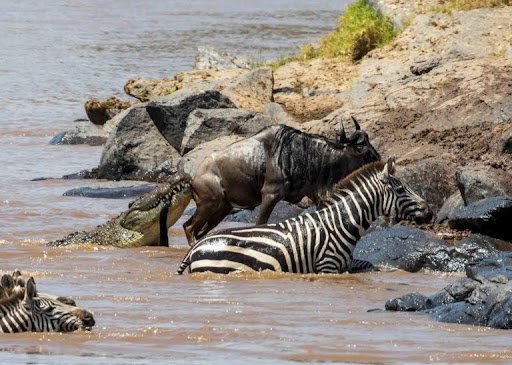
Stand on a ridge in the Mountain State at dawn in October and you’ll hear something that didn’t exist here twenty years ago. The high, haunting bugle of a bull elk rolls across the reclaimed coalfield slopes in Logan County, a sound that had been gone from this land for more than a century. That it’s back at all is the result of a long conservation effort, one most West Virginians quietly helped fund through hunting licenses and state tax dollars.
Roughly 8,000 miles east of here, a different kind of conservation is doing similar work on the other side of the world. For a small but growing number of us from the Tri-State, that distant work has become a trip worth saving for.
The Connection Most People Miss
Six years ago I took my first trip to Kenya. I grew up hunting whitetail on family land off the Coal River, and the thing that stuck with me about the Masai Mara wasn’t how different it felt from home. It was how familiar the conservation story was underneath.
In both places, wildlife came back because regular people figured out how to pay for it. In West Virginia, it’s the Rocky Mountain Elk Foundation, the WVDNR, and folks spending $34 on a guided elk tour at the Tomblin Wildlife Management Area. In Kenya, it’s Maasai landowners leasing their land to safari camps whose guest fees pay the rangers, the vets, and the school bursaries. Different continents, same principle. The Herald-Dispatch’s coverage of elk efforts continuing across Appalachia lays out the Appalachian half of it well.
Starting in Nairobi
Most people who book a safari assume they’re flying straight into the bush. You aren’t. You’re landing in Nairobi, Kenya’s capital, and spending a night or two in a city of around five million before anything else happens.
That part surprised me. What surprised me more is that Nairobi has an actual wildlife park inside the city limits. Nairobi National Park is fenced on three sides and open on the fourth, so animals still move freely in and out. You can see rhinos grazing with the Nairobi skyline behind them. It isn’t a zoo. It’s a real park, and it’s a smart way to push through jet lag on your first morning.
Entry for non-residents has sat at USD 80 per adult per day since October 2025, paid cashless through the Kenya Wildlife Service portal. The full breakdown is on the Nairobi National Park fees and entry page if you want specifics before you travel. Cash doesn’t work at the gate anymore, so either carry a card or set up mobile payment in advance.
A Morning I Still Think About
Out in the Mara, on the first morning of my second trip, I saw something that stayed with me.
We were driving through the Mara North Conservancy, a private block of land that sits next to the main reserve. The air was cold in that specific dry-savannah way, carrying the peppery-green smell of leleshwa, a silvery bush the Maasai use as a natural deodorant on long walks. My guide that morning was Daniel, a licensed KPSGA professional with ten years in the bush. He cut the engine and we sat there for maybe ten minutes.
A leopard dropped down from an acacia tree about forty yards out, slipped into the long grass, and was gone before anyone thought to lift a camera.
That conservancy exists because the Maasai landowners lease it to safari operators instead of grazing cattle on it. Same reclaimed-land-for-wildlife story as Logan County, just with different animals and a lot more sunshine.
Choosing the Right Kind of Trip
Kenya has safaris at every price point, from $150-a-night tented camps up to $3,000-a-night luxury lodges. The choice isn’t really about comfort; it’s about impact. A lower-impact operator based inside a private conservancy puts more of your money into conservation than a high-volume outfit running minivans into the main reserve every day.
If you’re planning a seven or ten-day trip and want it structured properly, the Kenya luxury safari itineraries page lays out the sensible combinations. The short version of it is: two or three nights in and around Nairobi, three or four nights in a Mara conservancy, and maybe a couple of nights in another ecosystem like Amboseli or Samburu if time allows.
Why Timing Matters
The Masai Mara National Reserve is known worldwide for the Great Migration. Between July and October, more than a million wildebeest cross the Mara River in waves, hunted by crocodiles and big cats. If watching a river crossing is what pulled you to Kenya, those months are the window. The best time to visit the Masai Mara guide lays out the month-by-month weather and wildlife breakdown.
Now the trade-off most travel pieces skip over. July through October is also peak crowd season inside the main reserve, with 60 or more vehicles at major river crossings on a busy day. Park fees jump in that window too. Non-residents pay USD 100 per adult per day from January through June, which then rises to USD 200 per day from July through December. If your schedule is flexible, late January through March is quieter, cheaper, and honestly better for photography, though the migration herds are south in Tanzania then.
Concerns Worth Airing
The folks I talk to back home have a few consistent worries about a trip like this.
Is it safe? The camps are professional and the drives are organized and managed. The weaker link tends to be the rural road between Narok town and the Mara gate, which is why flying in from Nairobi’s Wilson Airport is the right call for most first-time visitors.
Is it too expensive? It isn’t cheap. A decent mid-range Kenya safari costs $450 to $650 per person per day, all in. Spread across a year of saving, though, it lands in the same bracket as a nice Hawaii family trip, and the experience sits in your memory differently.
Will my kids handle it? Some camps have minimum ages of seven, and a few won’t take children under twelve. Ask before you book. Curious ten-year-olds and teenagers generally do fine and come back changed.
Before You Go
A straight-up disclaimer worth including. Park fees in Kenya have changed twice in the past three years with very little warning, so confirm rates with your operator before you commit to anything. Weather and migration timing shift too. Nothing about this trip is fully predictable, which is actually part of why it’s worth doing.
The elk herd in Logan County didn’t come back on its own, and the Mara hasn’t survived on its own either. Both landscapes are what they are today because people chose to pay attention and pay for the upkeep. A well-planned safari makes you one of those people for a couple of weeks. You come home to West Virginia and look at the elk ridges a little differently. That may be the best souvenir the trip actually gives you.