
 By admin@handinhandadventures.com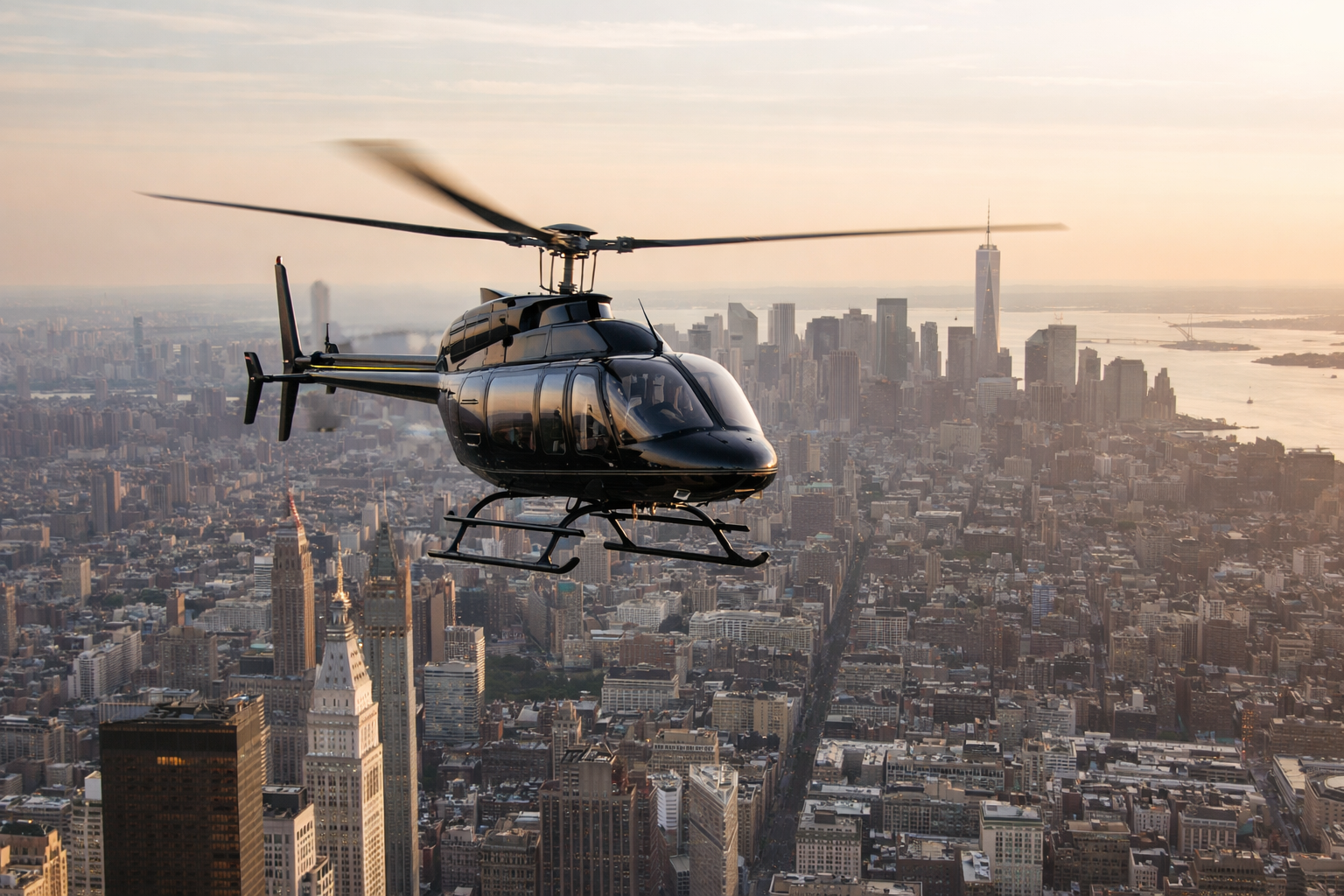
This article explains how aviation discipline, structured routes, tight coordination, and deliberate motion, creates a smoother experience for New York helicopter tours. It then connects that same framework to Aerial Film Production and Helicopter Aerial Cinematography, where repeatable movement and continuity are key to cinematic results.
On the ground, New York demands constant adjustment. Traffic and routes narrow, everything feels reactive, but from the air, that tension fades. The path is already defined.
That’s what people struggle to describe when they talk about helicopter flights. The skyline is easy to explain but that feeling is not.
The System Behind the Smoothness
New York airspace is layered, coordinated, and tightly managed. Pilots operate within defined corridors, altitude bands, and constant communication.
Passengers on NYC helicopter tours don’t see the structure behind that movement. They experience the result.
There’s no stop-and-go rhythm, rerouting around congestion and the flight experience feels continuous. That’s why many passengers step off New York helicopter tours feeling calmer than when they boarded, even though they’ve just flown over one of the most intense cities in the world.
Where Tourism and Film Quietly Overlap
What’s less obvious is how closely that passenger experience mirrors what happens in professional aviation work.
The same discipline that makes a tour flight feel composed is what supports Aerial Film Production in New York. Film crews don’t need altitude for spectacle. They need controlled motion, repeatable paths, and stable timing.
That only works if the aviation foundation is solid.
When helicopters are used for Helicopter Aerial Cinematography, the mission changes, but the standards do not. The aircraft operates within the same structured system whether it’s carrying visitors or camera rigs.
Why Helicopter Movement Feels Different
Street-level New York compresses you. Buildings narrow perspective. Traffic fragments attention. Movement happens in bursts.
Helicopter flight introduces:
- Continuous forward motion without interruption
- Clear, unobstructed lines of sight
- Gradual, controlled turns instead of abrupt stops
- Stable lateral movement across distance
That difference in motion is why helicopter footage carries a certain cinematic quality, and why the experience feels distinct even to passengers who aren’t thinking about cinematography..
The Psychological Shift
From above, urgency loses scale. The city still moves, but it no longer presses against you and for a production crew planning aerial sequences, it’s compositional. The same airspace that creates a calm passenger experience creates reliable visual geometry for filming.
Helicopters Aren’t Meant to Replace Everything
Helicopters are selective tools, they aren’t replacing trains or cars. They work best when timing, perspective, or continuity matter for someone experiencing the skyline for the first time or for a crew capturing it for a film.
Why It Stays With You
The difference is simple: helicopters remove the friction New York trains you to expect. No stop-and-go. No tunnel delays. No constant recalculating. Just a defined route and steady motion, the same foundation that makes aerial filming possible in a complex city.
If you’re curious, check out New York helicopter tours and take the city in the way it was meant to be seen, without the stress.